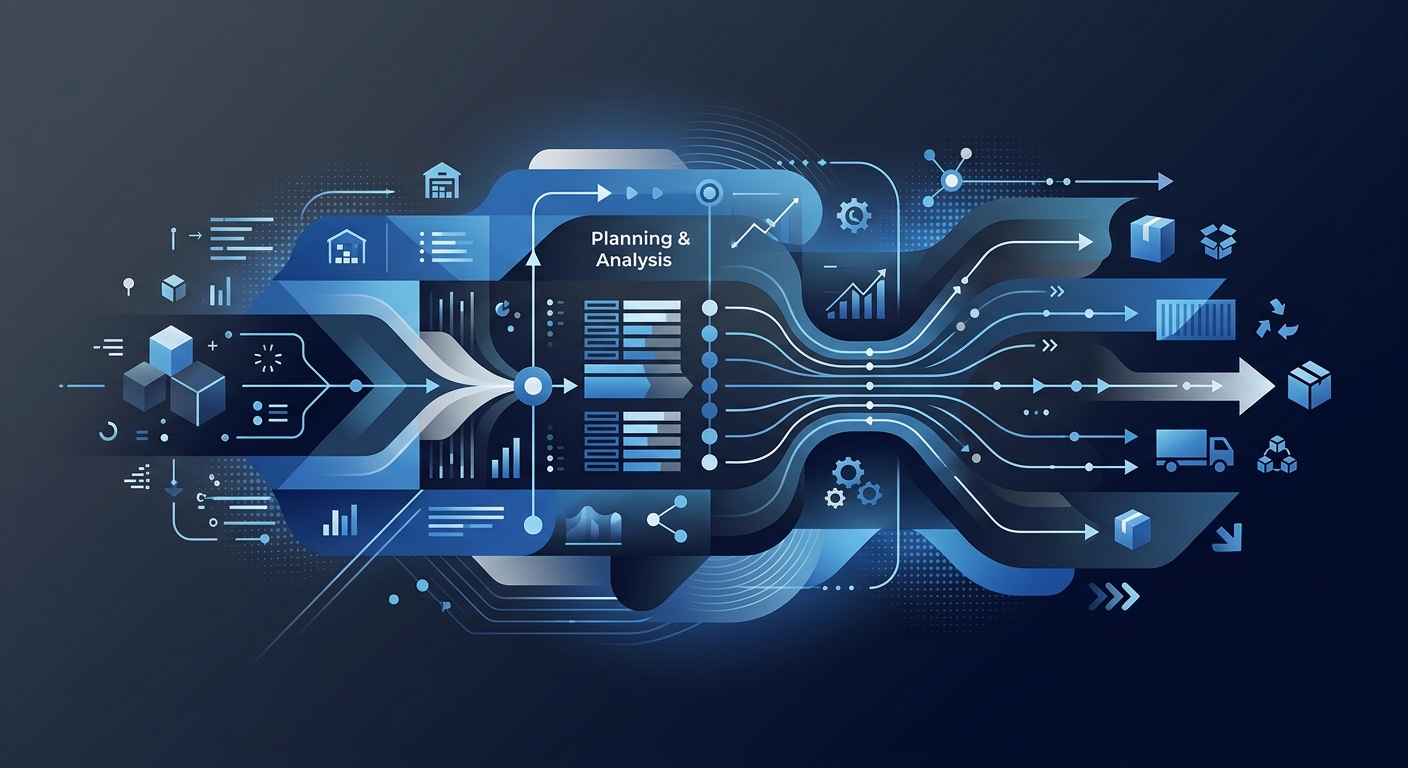
Supply planning is a critical operational function that ensures an organization has the right products, in the right quantities, at the right time to meet customer demand while minimizing costs. As the bridge between high-level demand forecasting and ground-level execution, supply planning dictates how a company uses its manufacturing capacity, manages its supplier relationships, and allocates its inventory across the distribution network. In an era of global volatility, mastering this discipline is no longer just about efficiency—it is about survival and resilience.
Key Takeaways
- Definition: Supply planning is the process of coordinating the delivery of goods from suppliers to manufacturers and eventually to consumers based on forecasted demand.
- Operational Bridge: It transforms the "what" of demand planning into the "how" of execution, managing production schedules, inventory levels, and supplier coordination.
- Resilience Gap: Approximately 70% of supply chain disruptions are caused by a lack of visibility into Tier 2 and Tier 3 suppliers during the planning phase.
- Modern Tools: Industry leaders are moving toward "Digital Twins" to simulate disruptions and optimize supply plans in real time.
- Strategy Shift: Organizations are increasingly evaluating the transition from Just-in-Time (JIT) to Just-in-Case (JIC) models to protect against market uncertainty.
Supply Planning Definition: The Strategic Framework
Supply planning is a structured process used by organizations to determine how to fulfill the requirements created by a demand forecast. At its core, supply planning is the management of resources—including raw materials, manufacturing capacity, and labor—to ensure that production aligns with market needs. According to App State Online, supply planning focuses on how to meet forecasted demand using available resources, which includes determining production schedules, inventory levels, and supplier coordination.
Unlike demand planning, which is outward-facing and focuses on predicting consumer behavior, supply planning is inward-facing. It looks at the constraints and capabilities of the supply chain. This involves balancing lead times, capacity constraints, and storage costs to create an optimized path for product flow. A successful supply plan results in a "constrained forecast," which is a realistic version of the demand plan that accounts for what the company can actually produce and deliver.
Supply Planning in Supply Chain Management: Where Does it Fit?
Within the broader context of supply chain management (SCM), supply planning serves as the engine of the Sales and Operations Planning (S&OP) process. It sits between demand planning and downstream logistics. While demand planning provides the input (the expected sales volume), supply planning provides the feasibility check.
Key Insight: Modern supply planning uses 'Digital Twins' to simulate various disruption scenarios and test resilience before a single dollar is spent on production.
For enterprise organizations, supply planning is the tactical layer that prevents stockouts and overstock situations. It ensures that the procurement department knows what to buy, the manufacturing floor knows what to build, and the logistics team knows what to move. Without a robust supply planning framework, the supply chain operates in a reactive state, leading to high expedited shipping costs and lost revenue due to unfulfilled orders.
Demand Planning vs. Supply Planning: Understanding the Difference
It is common to confuse demand planning with supply planning, but they represent two distinct sides of the same coin. Understanding the difference between them is essential for organizational alignment.
- Demand Planning: This involves forecasting customer demand based on historical data, market trends, and seasonality. It answers the question: How much will our customers want to buy?
- Supply Planning: This involves determining how to meet that demand. It answers the question: How will we produce or acquire those goods given our current constraints?
App State Online notes that accurate demand planning helps companies make informed decisions, but supply planning is what actually directs the use of available resources. If demand planning is the "dream," supply planning is the "reality check." When these two functions are not synchronized, the result is either excess inventory that ties up working capital or a failure to meet customer service levels.
Core Activities in the Supply Planning Process
The supply planning process is not a single event but a cycle of continuous optimization. It generally involves four primary activities:
1. Production Planning
This involves creating a Master Production Schedule (MPS) that outlines which products will be manufactured, in what quantities, and at which facilities. It must account for machine capacity, labor availability, and maintenance windows.
2. Inventory Management
Planners must determine the optimal levels of safety stock, work-in-process (WIP), and finished goods. The goal is to maximize manufacturing & logistics efficiency while minimizing the cost of holding inventory.
3. Distribution Requirements Planning (DRP)
DRP ensures that goods are in the right location within the distribution network. This activity calculates the need for replenishing inventory at regional warehouses or retail outlets based on local demand signals.
4. Supplier Coordination
Supply planning extends beyond the four walls of the company. It requires sharing plans with Tier 1 and Tier 2 suppliers to ensure they can provide the necessary raw materials. Research shows that 70% of disruptions occur because of a lack of visibility into these deeper supplier tiers.
7 Benefits of Effective Supply Planning
Implementing a sophisticated supply planning strategy offers measurable competitive advantages:
- Improved Customer Service Levels: By ensuring product availability, companies maintain high fulfillment rates and customer loyalty.
- Reduced Inventory Costs: Optimization reduces excess stock, freeing up capital that can be reinvested in the business.
- Enhanced Operational Efficiency: Stabilized production schedules reduce the need for expensive last-minute changes and overtime.
- Better Supplier Relationships: Providing suppliers with long-term visibility allows them to plan their own production, often leading to better pricing and reliability.
- Increased Agility: A well-structured plan allows organizations to respond more quickly when market conditions change.
- Minimized Waste: Especially in industries like agricultural products, precise planning reduces the spoilage of perishable goods.
- Higher Profit Margins: By optimizing the balance between supply and demand, companies avoid both the costs of stockouts and the markdowns associated with overstock.
Supply Planning Challenges and Tips for Tackling Them
Supply planners today face an unprecedented level of complexity. Global trade tensions, climate change, and shifting consumer expectations have made traditional planning models less effective.
Challenge: Lead Time Variability
Global shipping delays can turn a 30-day lead time into a 90-day wait overnight. Tip: Implement stochastic modeling rather than relying on static averages. By planning for a range of lead times, you can build more resilient safety stock buffers.
Challenge: Data Silos
Often, the production team, the sales team, and the procurement team use different software systems that do not communicate with each other. Tip: Adopt an integrated S&OP platform that serves as a "single source of truth." This ensures that a change in the demand forecast immediately triggers a recalculation of the supply plan.
Challenge: Tier 2 Visibility
Many companies only have visibility into their direct suppliers. If your supplier's supplier has a problem, your plan will fail. Tip: Use AI-driven supply chain mapping tools to identify risks deep in the supply chain before they affect your production.
Technology and AI in Supply Planning Software
The future of supply planning is autonomous. Traditional ERP systems are being augmented by AI in supply chain and logistics to handle complex calculations that humans cannot process in real time.
AI agents can now perform logistics exception management by automatically rerouting shipments or adjusting production schedules when a delay is detected. Furthermore, supply chain generative AI allows planners to query their data using natural language, asking questions like "How will a 10% increase in fuel costs affect our distribution plan for Q3?"
"The transition from static planning to predictive resilience is the defining shift of the 2020s. Organizations that fail to adopt AI-driven visibility will find themselves perpetually managing yesterday's crises." — Industry Expert Synthesis
From JIT to JIC: Shifting Inventory Strategies
A major gap in many supply planning discussions is the practical shift from Just-in-Time (JIT) to Just-in-Case (JIC) models.
- Just-in-Time (JIT): Focuses on a "lean" workflow where materials arrive exactly when needed. This minimizes storage costs but leaves the company vulnerable to any disruption.
- Just-in-Case (JIC): Prioritizes resilience by holding extra inventory (safety stock). While this increases holding costs, it protects against stockouts during supply chain shocks.
When moving from JIT to JIC, the supply planning workflow shifts from a focus on cost minimization to risk minimization. Planners must accept higher inventory costs as a form of "insurance" against the much higher cost of a total production halt.
Reconciling Conflicts: When Demand and Capacity Clash
What happens when the demand forecast exceeds the available production capacity? This is a common point of friction that requires a specific protocol for reconciliation:
- Audit Planning Maturity: Ensure the data being used is accurate and up to date.
- Unconstrained Forecast Alignment: Share the full demand forecast with the supply team so they understand the total potential requirement.
- Scenario Modeling: Use software to run "what-if" scenarios. Can we outsource production? Can we add a third shift?
- Executive Consensus: Bring the conflict to the S&OP meeting for a final decision on which products to prioritize based on margin and strategic importance.
Frequently Asked Questions
What is the primary goal of supply planning?
The primary goal is to balance supply and demand in the most cost-effective way possible while maintaining high customer service levels.
How often should a supply plan be updated?
In most enterprise environments, supply plans are updated weekly or even daily, depending on the volatility of the industry and the sophistication of the planning software.
What specific KPIs should a supply planner prioritize?
Before execution begins, planners should prioritize forecast accuracy metrics such as Root Mean Square Error (RMSE) and Weighted Mean Absolute Percentage Error (WMAPE). Additionally, tracking Forecast Value Add helps evaluate the effectiveness of the planning process itself.
Can AI replace supply planners?
While AI can automate routine calculations and exception handling, the role of the human planner is shifting toward strategic decision-making and relationship management. AI acts as a co-pilot, not a replacement.
What is a 'Digital Twin' in supply planning?
A Digital Twin is a virtual replica of the physical supply chain that allows planners to simulate the impact of changes—such as a port strike or a factory fire—without risking real-world operations.
Conclusion
Supply planning is the heartbeat of a functional enterprise. By effectively bridging the gap between demand forecasting and operational execution, it allows companies to remain lean yet resilient. As technology continues to evolve, the integration of AI and real-time data will make supply planning more dynamic, transforming it from a back-office function into a core competitive advantage. For leaders in manufacturing, the path forward involves breaking down data silos, investing in visibility, and embracing the predictive power of modern planning tools.