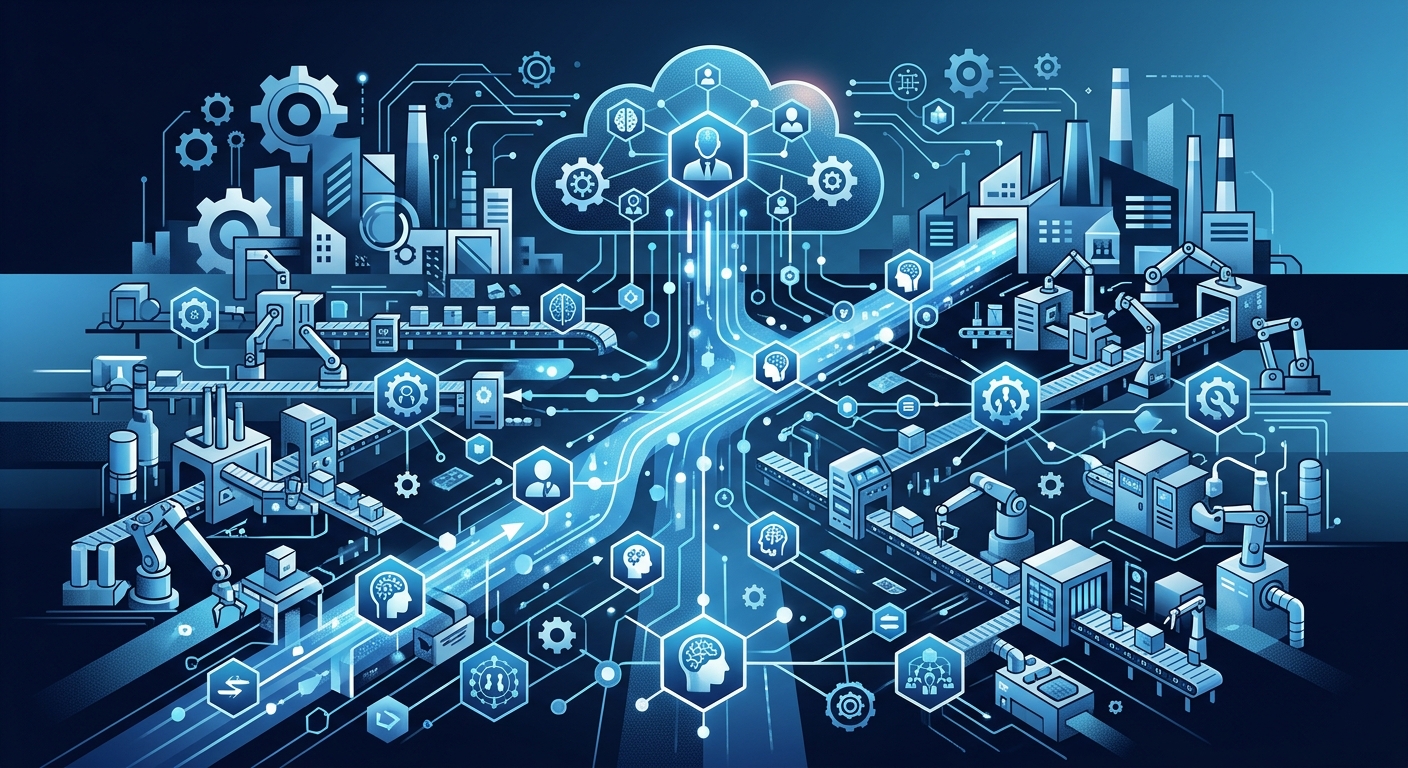
Manufacturing change orders drive product iteration and supply chain agility, yet most organizations manage them through fragmented, manual workflows. These legacy processes introduce systemic latency, compliance exposure, and margin erosion. At Meo, we deploy artificial intelligence not as an experimental software layer, but as a measurable digital workforce. By implementing a supply chain AI workforce under a strict pay-for-performance contract, manufacturers replace administrative overhead with verified operational results. This model eliminates speculative technology investment, ensuring manufacturing AI agents scale only when they deliver audited cycle-time reductions, error elimination, and permanent labor reallocation.
The Hidden Cost of Manual Change Order Management
Fragmented approval workflows across engineering, procurement, quality, and logistics create compounding production delays that directly impact revenue recognition. A single component or sourcing change triggers manual handoffs, disjointed communications, and disconnected spreadsheet reconciliations. Each delay pushes back production windows, increases expedited freight costs, and erodes customer delivery commitments. Manual data reconciliation further compounds risk. Human-driven updates to bills of materials (BOMs), inventory ledgers, and regulatory documentation frequently suffer from transcription errors, version drift, and communication gaps. These inaccuracies trigger audit findings, create phantom inventory, and degrade gross margins through scrap, rework, and compliance failures.
Legacy Robotic Process Automation (RPA) and rule-based routing cannot resolve this structural bottleneck. Without contextual reasoning, traditional scripts fail when processing unstructured supplier communications, non-standard part numbers, or cross-system data mismatches. Human-dependent routing also imposes a hard capacity ceiling that cannot scale with modern multi-site operations. As manufacturing networks expand across regional plants, contract manufacturers, and global hubs, administrative overhead grows exponentially. Industry analysis indicates only 14% of organizations successfully bridge the gap between AI pilots and production-grade operations, primarily due to fragmented data infrastructure and undefined operational ownership Digital Applied. Without an autonomous orchestration layer, manufacturers remain reactive, paying premium labor costs for low-value administrative tasks.
How Manufacturing AI Agents Reengineer Workflows
Next-generation manufacturing AI agents reengineer the change order lifecycle by functioning as autonomous, cross-system decision engines. These agents validate BOM revisions in real time, cross-reference global supplier lead-time databases, and instantly assess warehouse capacity against active production schedules. By processing structured ERP data and unstructured engineering documentation simultaneously, they eliminate the manual triage phase that traditionally delays Engineering Change Notices (ECNs) by days or weeks. Every proposed modification is evaluated against current inventory, regulatory mandates, and supplier viability before execution.
Crucially, these agents orchestrate workflows across disparate platforms—including SAP, Oracle ERP, Manufacturing Execution Systems (MES), and Warehouse Management Systems (WMS)—without custom middleware or fragile API gateways. They interact natively with legacy interfaces, cloud repositories, and existing databases to extract, interpret, and update records while maintaining strict data lineage. When an agent encounters a compliance flag or structural exception, it automatically generates audit-ready documentation, logs the complete decision pathway, and routes only high-complexity deviations to human stakeholders. This exception-handling architecture aligns with enterprise-grade Agent Monitoring & Quality Assurance, ensuring engineers and planners focus on strategic optimization rather than routine routing.
The result is a closed-loop system where standard change orders process autonomously in minutes, not days. By removing manual intervention from validated workflows, organizations drastically reduce configuration errors, compliance violations, and production stoppages. This shift transforms change management from a reactive cost center into a proactive, data-driven advantage, enabling AI Supply Chain Agents to maintain operational velocity during high-volume product transitions.
Deploying a Supply Chain AI Workforce Across Sites
Scaling autonomous operations across multiple plants and distribution centers requires standardized deployment architectures, not bespoke, site-specific configurations. Meo utilizes standardized agent blueprints that encapsulate validated change order logic, compliance rules, and cross-system integration protocols. This modular approach enables rapid, consistent rollouts across global operations, ensuring every facility operates from the same decision-making baseline. Standardization eliminates the performance variability that typically hinders multi-site deployments, guaranteeing predictable throughput and streamlined governance.
Within this framework, logistics automation agents dynamically adjust inbound schedules, outbound shipping windows, carrier assignments, and freight routing in real time. When a change order impacts material availability or packaging specifications, agents instantly recalculate optimal logistics pathways, renegotiate carrier capacity, and update receiving protocols without human intervention. This prevents line starvation and minimizes demurrage and detention costs. Integrated warehouse AI agent solutions ensure that inventory adjustments, picking lists, and slotting strategies update synchronously with engineering revisions, maintaining precise physical-to-digital alignment across distribution networks.
This enterprise-scale deployment is engineered for zero operational disruption. Agents integrate as an intelligent overlay that respects existing IT security policies, network segmentation, and change management protocols. By avoiding disruptive rip-and-replace implementations, manufacturers achieve immediate workflow acceleration while maintaining full operational continuity. The AI workforce scales proportionally to business complexity, delivering consistent performance improvements across the value chain without compromising system stability, data sovereignty, or production uptime.
The Accountability Framework: Pay-for-Performance Deployment
Traditional AI deployments rely on speculative investment: organizations pay substantial licensing, implementation, and maintenance fees regardless of business impact. Meo inverts this model through a strict Pay-for-Performance Framework. Clients fund deployments only after verified KPI improvements are delivered and independently validated against pre-agreed baselines. This outcome-based structure aligns technology providers directly with executive leadership, ensuring every dollar invested correlates to measurable operational gains.
The framework operates on transparent, auditable tracking. Every deployed agent logs cycle-time reductions, error elimination rates, compliance adherence, and administrative labor reallocation in real-time executive dashboards. These metrics are accessible to operational and financial leadership, providing complete visibility into workforce efficiency. If an agent fails to meet predefined thresholds for processing speed or accuracy, funding automatically adjusts. This risk-transfer model eliminates the financial exposure of underperforming technology and mandates continuous optimization from the deployment team.
Under this architecture, there is zero speculative capital expenditure. The AI workforce scales only when return on investment is mathematically proven, transforming AI from a balance-sheet liability into a direct margin driver. Manufacturers can confidently allocate budget toward verified efficiency gains, knowing that administrative overhead is permanently replaced by accountable, performance-guaranteed digital workers. This disciplined approach has become a strategic cornerstone for enterprises transitioning from experimental automation to a Scaled Agentic Operating Model that prioritizes fiscal discipline and executive accountability.
From Pilot to Enterprise Scale: The Deployment Blueprint
Transitioning from controlled pilots to enterprise-scale deployment requires a phased methodology that mitigates operational risk while accelerating time-to-value. Meo’s framework follows a rigorous three-phase blueprint designed for complex manufacturing environments:
- Phase 1: Baseline Mapping & Sandbox Validation. Historical change order data, supplier correspondence, and compliance logs are ingested into a secure, isolated environment. Agents execute routing and validation tasks without touching live systems. Performance is measured against established KPIs to calibrate decision thresholds and establish a verified efficiency baseline.
- Phase 2: Parallel Processing & Human-in-the-Loop Oversight. Agents operate alongside change management and procurement teams, processing real-time orders while routing decisions are continuously audited. This phase allows precise threshold tuning to align with organizational risk tolerance, quality standards, and regulatory requirements. It bridges the critical gap between theoretical capability and operational reliability—a primary reason AI projects stall post-pilot Digital Applied.
- Phase 3: Full Autonomous Deployment & Continuous Optimization. Once agents consistently exceed Phase 2 KPIs, they assume primary processing authority for standard change orders. Ongoing monitoring tracks performance, identifies emerging bottlenecks, and proactively recalibrates decision thresholds based on supplier shifts, seasonal volatility, and regulatory changes. This closed-loop optimization ensures continuous adaptation without manual reprogramming. By adhering to this Implementation Methodology, manufacturers achieve production-grade autonomy without disruption, securing sustainable margin expansion, audit-ready compliance, and long-term competitive resilience.
Conclusion
The future of manufacturing operations belongs to organizations that treat AI as an accountable, outcome-driven workforce rather than a speculative software experiment. By replacing fragmented, manual change order processes with autonomous agents, manufacturers eliminate compounding production delays, compliance vulnerabilities, and administrative bloat. Meo’s pay-for-performance model guarantees that technology investment scales only when it delivers verified, auditable results that directly impact the P&L.
Transform change management from a cost center into a measurable competitive advantage. Request an operational assessment to see how accountable AI agents can deliver immediate cycle-time reductions, labor optimization, and margin recovery across your manufacturing and logistics network.