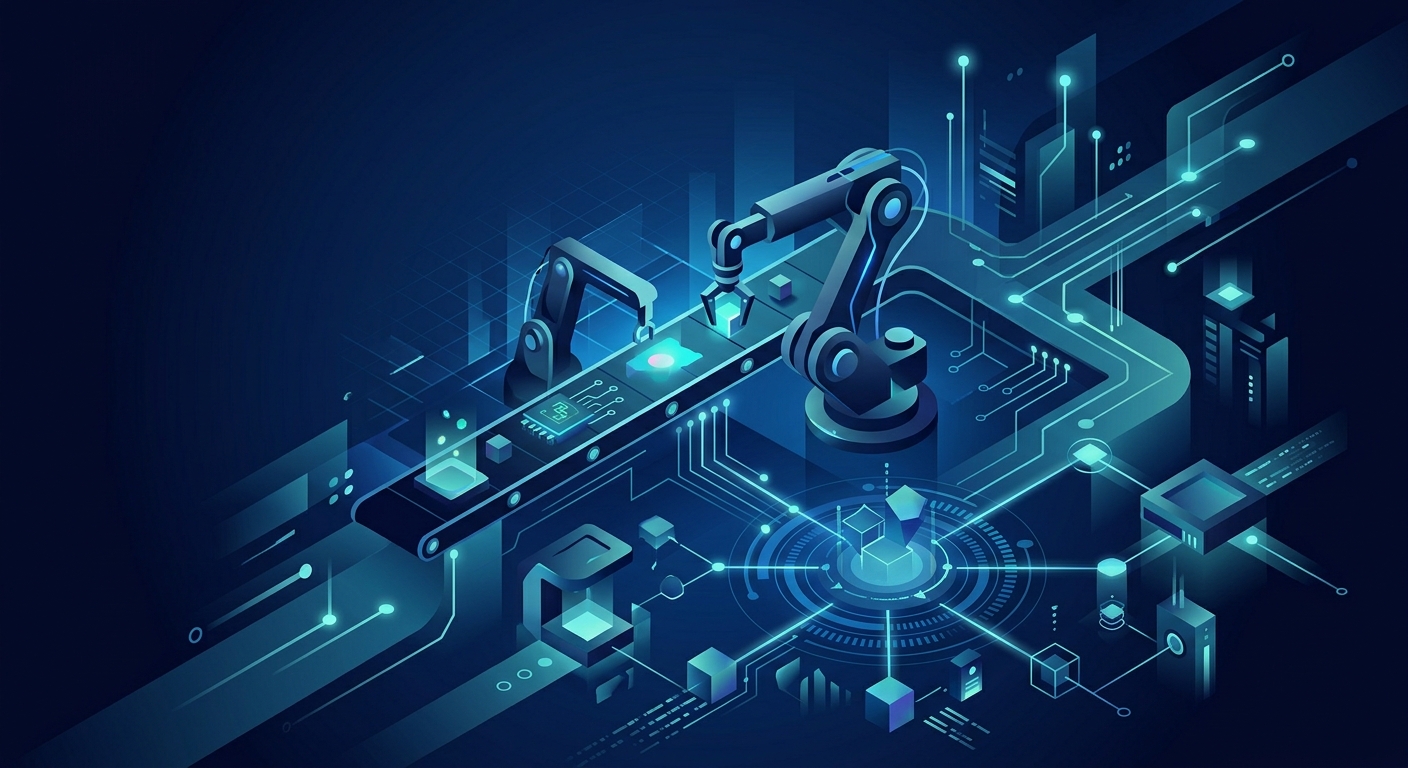
The future of manufacturing is a fundamental shift where advanced digital technologies converge with human-centric design to create resilient, sustainable, and highly efficient production ecosystems. While the previous decade focused on the pure automation and connectivity of Industry 4.0, the next era—often termed Industry 5.0—prioritizes collaboration between humans and machines to solve complex global challenges. This evolution is not merely about replacing labor with robotics; it is about augmenting human capability with artificial intelligence (AI) to drive unprecedented levels of customization and environmental stewardship.
For enterprise decision-makers, understanding the future of manufacturing requires looking beyond the factory floor. It involves a holistic view of supply chain resilience, the integration of digital twins, and the strategic deployment of generative AI. According to the 2024 Manufacturing Industry Outlook by Deloitte, 86% of manufacturing executives believe that smart factory initiatives will be the primary driver of competitiveness over the next five years. As we move toward 2030, the ability to pivot from mass production to mass personalization will define the market leaders.
Key Takeaways
- Human-Centricity: Industry 5.0 shifts the focus from pure machine efficiency to worker well-being and collaborative innovation.
- Smart Factory Dominance: 86% of executives cite smart factory initiatives as their top competitive advantage for 2024 and beyond.
- Digital Twin Growth: The simulation market is projected to grow by 35% annually through 2030, enabling risk-free virtual testing.
- Labor Demand: Despite automation, the sector faces a projected 3.8 million job opening gap by 2033, requiring aggressive upskilling.
- Resilient Supply Chains: A shift toward "friend-shoring" and local production is replacing global cost-optimization strategies.
The Evolution of the Smart Factory
A smart factory is a highly digitized and connected production facility that uses technologies like IoT, AI, and big data analytics to optimize manufacturing processes autonomously. Unlike traditional automated plants that follow rigid programming, smart factories are self-correcting. They use real-time data to adjust to supply chain disruptions, equipment wear, and shifting demand cycles without human intervention.
The integration of the Agentic Enterprise model into manufacturing means that AI agents are no longer just monitoring data; they are making operational decisions. For instance, an AI agent might detect a slight vibration in a CNC machine and automatically schedule predictive maintenance during a planned shift change to avoid unscheduled downtime.
Key Insight: According to Deloitte (2024), the US manufacturing sector will likely need 3.8 million workers by 2033. This confirms that the smart factory is not a lights-out facility devoid of people, but a high-tech hub requiring a skilled workforce to manage AI-driven systems.
Key Technologies Shaping the Future of Manufacturing
Several foundational technologies are converging to redefine what is possible in industrial settings. These tools allow manufacturers to move from reactive maintenance to proactive innovation.
1. Digital Twins and Simulation
Digital twin technology creates a virtual representation of a physical object or system that serves as its real-time digital counterpart. By 2030, the global market for digital twins in manufacturing is expected to grow at a CAGR of 35%, as cited by NIST (2023). These virtual models allow engineers to simulate "what-if" scenarios—such as changing a production line layout or testing a new material—without pausing physical operations.
2. Generative AI and Predictive Maintenance
Generative AI is moving beyond text generation into industrial design and maintenance. By analyzing historical sensor data, AI can predict failures before they occur. This reduces maintenance costs by up to 30% and eliminates equipment downtime. AI agents can also assist in automated regulatory change tracking, ensuring that factory emissions and safety protocols remain compliant with evolving local laws in real time.
3. Additive Manufacturing (3D Printing)
Additive manufacturing is evolving from a prototyping tool to a full-scale production method. This technology enables the creation of complex, lightweight geometries that are impossible to achieve with traditional subtractive manufacturing. It also supports the shift toward local production, as parts can be printed on demand near the end user, reducing the carbon footprint of shipping.
Strategic Implications for Enterprise Decision-Makers
For C-suite executives, the future of manufacturing demands a shift in capital allocation. Investment is moving away from physical hardware toward software-defined manufacturing. The primary challenge is no longer just purchasing a robotic arm, but ensuring that arm can communicate with the entire enterprise resource planning (ERP) system.
Leaders must also address the labor gap. With 3.8 million jobs projected to be needed by 2033, the competition for talent will be as fierce as the competition for market share. This requires a focus on Industry 5.0 principles, which prioritize the human element. By creating environments where technology supports workers—rather than replacing them—firms can improve retention and attract younger, tech-savvy talent.
Furthermore, implementing continuous AI agent monitoring is essential to ensure that the autonomous systems managing the factory floor operate within ethical and safety boundaries. Decision-makers must implement robust AI agent audit trails to maintain transparency in automated decision-making processes.
Building a Resilient Supply Chain for 2030
The global supply chain model of the early 2000s, which prioritized the lowest possible cost through offshore manufacturing, is being replaced by a model that prioritizes resilience and proximity. "Friend-shoring"—the practice of manufacturing in countries that share similar values and stable trade relations—is becoming a dominant strategy.
| Strategy | Traditional Model (Industry 3.0/4.0) | Future Model (Industry 5.0) |
|---|---|---|
| Sourcing | Global Lowest Cost | Regional Resilience/Friend-shoring |
| Inventory | Just-in-Time (JIT) | Just-in-Case (JIC) / Buffer Stocks |
| Production | Mass Production (Rigid) | Mass Personalization (Flexible) |
| Sustainability | Compliance-based | Circular Economy / Design-led |
This shift is supported by the Future of Growth 2024 report by the World Economic Forum, which highlights that sustainable and inclusive growth is the only path to long-term economic stability. Manufacturers are now integrating circular economy principles, where products are designed from the outset to be disassembled, recycled, or repurposed.
Industry 5.0: The Human-Centric Turn
Industry 5.0 is an evolutionary stage of industrialization defined by the return of the human element to the manufacturing process. While Industry 4.0 was about the "Internet of Things" and machine-to-machine communication, Industry 5.0 is about the "Internet of People" and human-machine collaboration.
Authoritative Quote: "Industry 5.0 recognizes that the unique creativity and problem-solving abilities of human workers are indispensable, even in an era of advanced AI. The goal is to create a symbiotic relationship where technology handles the '3Ds'—dull, dirty, and dangerous tasks—while humans focus on innovation and complex oversight." — Synthesis of concepts from MDPI Sustainability (2023).
This human-centric approach also addresses the psychological impact of automation. By positioning AI as a co-pilot rather than a replacement, companies can reduce the fear of jobs being replaced by AI. In the manufacturing context, this often means upskilling floor workers to become "robotics technicians" or "data analysts" who oversee the automated systems.
Sustainability as a Core Driver of Innovation
In the future of manufacturing, sustainability is no longer an optional CSR (Corporate Social Responsibility) initiative; it is a fundamental business requirement. Regulatory pressures and consumer demand are forcing manufacturers to track the carbon footprint of every component in their supply chain.
Advanced AI agents are now being used for autonomous regulatory change monitoring, allowing firms to adapt to new environmental laws quickly. Digital twins also enable real-time optimization of energy consumption, reducing the waste generated during the ramp-up of new production lines.
The Role of AI in Workforce Transformation
Workforce transformation is perhaps the most significant hurdle in the future of manufacturing. As AI takes over technical calculations and routine monitoring, demand for architecture and engineering occupations will shift toward systems integration and holistic design.
Manufacturers must adopt new performance metrics to measure the effectiveness of their human-AI teams. Instead of measuring simple output per hour, firms are tracking AI agent ROI and how effectively automated systems reduce the cognitive load on human operators. This shift keeps the workforce engaged and ensures that technology investments translate into real bottom-line growth.
Frequently Asked Questions
What is the main difference between Industry 4.0 and Industry 5.0?
Industry 4.0 focuses on automation, connectivity, and machine efficiency. Industry 5.0 builds on these technologies but adds a human-centric layer, prioritizing worker well-being, sustainability, and collaboration between humans and machines.
Will AI replace all manufacturing jobs by 2030?
No. While AI will automate repetitive and dangerous tasks, research from Deloitte indicates that the US manufacturing sector will actually face a shortage of 3.8 million workers by 2033. Jobs will shift from manual labor to technical oversight and system management.
How do digital twins benefit manufacturers?
Digital twins allow manufacturers to create a virtual replica of their production lines. This enables them to simulate changes, predict equipment failures, and optimize energy use without risking physical assets or pausing production.
What is "friend-shoring" in manufacturing?
Friend-shoring is a supply chain strategy where companies move their manufacturing operations to countries that are geopolitical allies. This reduces the risk of supply chain disruptions caused by international conflict or trade disputes.
How does generative AI help in a factory setting?
Generative AI supports predictive maintenance by analyzing sensor data to forecast parts failure. It also assists in generative design, where AI suggests the most efficient and lightweight shapes for parts based on specific engineering constraints.