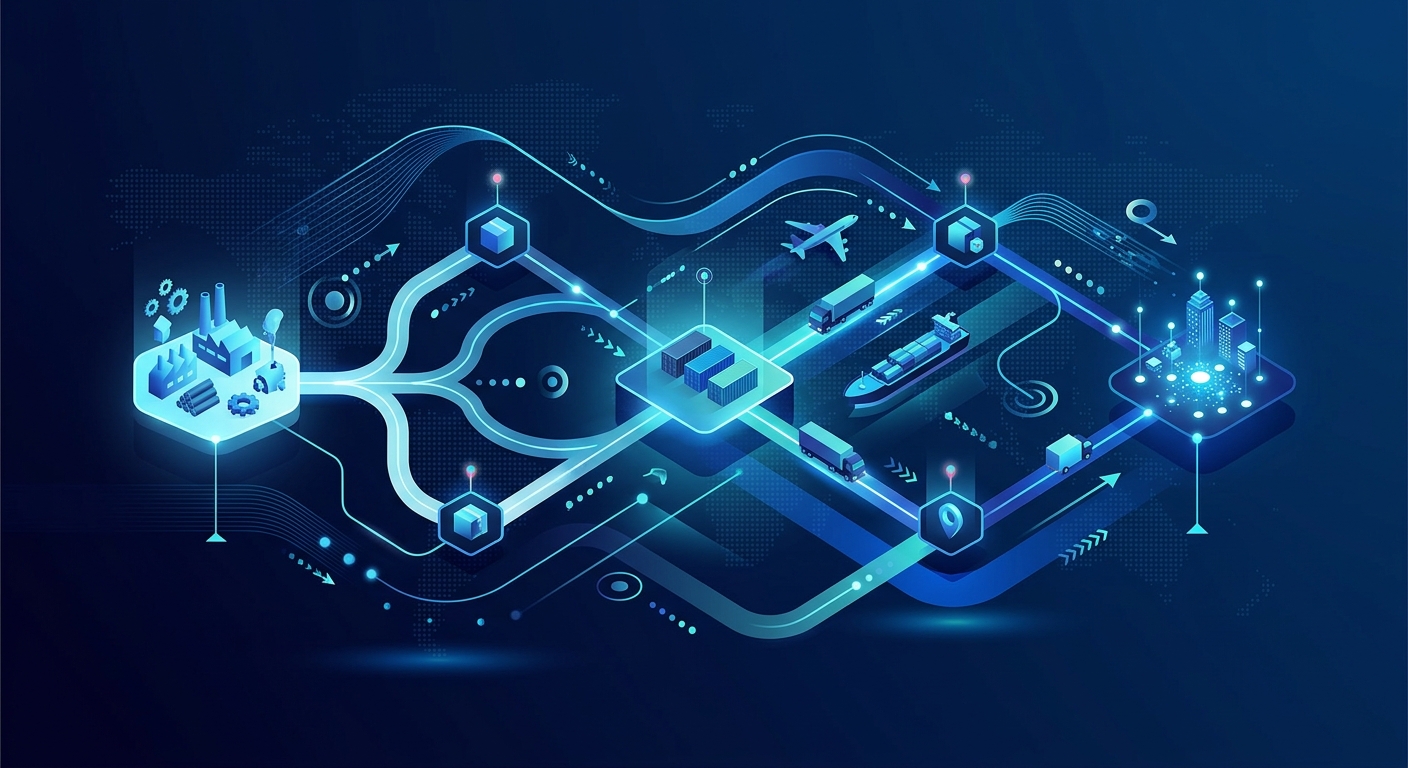
Understanding Supply Chain Visibility
Supply chain visibility is the ability to track and monitor all activities and events within the supply chain as they happen. This encompasses the movement of raw materials, work-in-progress items, and finished goods from suppliers to final customers. In the modern enterprise, it is no longer sufficient to simply know when a shipment has left a warehouse; true visibility requires a real-time, end-to-end view of a company's logistics, inventory, and warehouse operations.
According to Seattle University, real-time supply chain visibility provides a complete operational picture that allows leaders to make informed decisions. This transparency is not just about location tracking; it is about understanding the status of every component in the value chain. As global networks become more complex, the distinction between simple tracking and strategic visibility becomes the difference between a resilient organization and one vulnerable to disruption.
Key Insight: While many companies claim to have visibility, research shows that only 2 percent of companies have visibility into their supply chain beyond second-tier suppliers, according to Seattle University. This lack of deep-tier awareness creates significant blind spots in global risk management.
The Strategic Importance of Real-Time Data
In an era of instant gratification and volatile global markets, real-time data is the foundation of logistics optimization. When an enterprise achieves high-level visibility, it transforms its supply chain from a cost center into a strategic asset. The primary drivers for this shift include risk mitigation, cost reduction, and enhanced customer satisfaction.
Real-time tracking allows companies to identify bottlenecks before they become critical failures. For instance, if a shipment of raw materials is delayed by weather, a visible supply chain triggers an immediate alert, allowing production schedules to be adjusted or alternative sourcing to be activated. This proactive approach saves millions in potential downtime. Furthermore, Georgetown Journal of International Affairs notes that AI-enabled planning improves decision-making across production and inventory management, ensuring that capital is not tied up in excess safety stock.
The Building Blocks of Supply Chain Visibility
To build a robust visibility framework, organizations must integrate four foundational pillars: data integration, process synchronization, technology adoption, and partner collaboration.
- Data Integration: Consolidating information from ERPs, TMS, and WMS into a single source of truth.
- Process Synchronization: Ensuring that physical movements are reflected digitally in near real-time.
- Technology Adoption: Utilizing IoT, AI, and cloud platforms to capture and analyze data.
- Partner Collaboration: Establishing trust-based data-sharing agreements with suppliers across all tiers.
Without these building blocks, visibility remains fragmented. For example, a company might have excellent internal warehouse data but remain blind to the transit status of goods handled by third-party logistics (3PL) providers. Bridging these gaps requires a move toward the Agentic Enterprise, where autonomous systems help manage these complex data handoffs.
Benefits of Supply Chain Visibility for Global Brands
The advantages of high-fidelity visibility extend far beyond the logistics department. They affect the entire P&L statement and brand health. Key benefits include:
- Improved Agility: The ability to pivot sourcing or distribution strategies rapidly in response to geopolitical or environmental shifts.
- Reduced Operational Costs: Minimizing expedited shipping fees and reducing labor costs through better scheduling.
- Enhanced Brand Trust: Providing customers with accurate delivery windows and ethical sourcing proof.
- Sustainability Compliance: Tracking the carbon footprint and social impact of every supplier.
KPMG highlights that end-to-end transparency allows stakeholders to monitor environmental footprints and social aspects like child labor, which is increasingly critical for regulatory compliance and consumer loyalty.
Measuring Supply Chain Data: KPIs for Visibility
You cannot manage what you do not measure. To evaluate the effectiveness of visibility initiatives, enterprise leaders should track specific Key Performance Indicators (KPIs). These metrics provide an objective view of supply chain health.
| KPI Category | Metric | Definition |
|---|---|---|
| Accuracy | Inventory Accuracy | The variance between physical stock and digital records. |
| Velocity | Order Cycle Time | The total time from order placement to delivery. |
| Reliability | On-Time In-Full (OTIF) | The percentage of orders delivered on time and with all items. |
| Transparency | Tier-N Visibility | The percentage of the supply chain mapped beyond Tier-1. |
While these focus on logistics, it is worth noting that Harvard Business School emphasizes that KPIs like search engine rankings and customer acquisition costs are also influenced by supply chain reliability; if products are frequently out of stock, marketing ROI declines sharply.
Common Barriers to Improving Supply Chain Visibility
Despite the clear benefits, many organizations struggle to achieve full visibility. The primary obstacles are often cultural and technical rather than purely financial. Common barriers include:
- Data Silos: Information trapped in separate systems that do not communicate.
- Legacy Infrastructure: Older ERP systems that lack the APIs necessary for real-time data streaming.
- Supplier Resistance: Smaller suppliers may lack the technology or the willingness to share sensitive operational data.
- Data Quality: Inconsistent data formats and manual entry errors that produce unreliable data.
Overcoming these barriers requires a firm commitment to digital transformation. Organizations often start by implementing Predictive Maintenance and IoT sensors to prove the value of real-time data before scaling to full supply chain-wide visibility.
How Supply Chain Visibility Drives Business Growth
Visibility is a growth engine. By reducing the "uncertainty buffer"—the extra time and inventory companies keep to protect against the unknown—enterprises free up working capital that can be reinvested into R&D or market expansion.
Furthermore, visibility enables new business models, such as Subscription-as-a-Service or direct-to-consumer (DTC) shipping, which require precise inventory control. According to Deloitte, using blockchain to drive transparency creates a single source of truth that was previously impossible, fostering the trust necessary for high-speed global trade.
Advanced Technologies: AI, Blockchain, and Digital Twins
The future of visibility lies in the convergence of AI, blockchain, and Digital Twin Technology.
- AI and Machine Learning: AI can analyze vast datasets to predict disruptions before they occur. A McKinsey survey cited by Georgetown found that the highest cost savings from AI are found in supply chain management.
- Blockchain: This technology provides an immutable ledger, ensuring that data shared between competitors or across borders is untampered and trustworthy.
- Digital Twins: Creating a virtual replica of the physical supply chain allows for real-time simulation and "what-if" scenario planning.
Key Insight: To achieve real-time visibility across multi-tier networks, organizations require platforms that aggregate data from IoT sensors, carrier APIs, and ERP systems. Integrating Transportation Management Systems (TMS) and Warehouse Management Systems (WMS) into a unified operational picture is essential for Tier-3 and Tier-4 supplier tracking.
Supply Chain Visibility as a Foundation for ESG Reporting
Environmental, Social, and Governance (ESG) reporting is moving from a voluntary disclosure to a regulatory requirement. Supply chain visibility is the essential building block for future-ready ESG reporting. Without knowing exactly where materials originate, a company cannot truthfully claim its products are sustainably sourced.
KPMG notes that transparency provides reassurance to internal and external stakeholders about risks such as deforestation or carbon neutrality. Organizations that lead in visibility are better positioned to navigate the complex web of global sustainability regulations.
Addressing the SME Gap: Affordability and Access
Small-to-medium enterprises (SMEs) often feel priced out of advanced visibility tools. However, visibility is becoming more accessible. SMEs can improve their standing by using digital technologies and effective data management to ensure their operational data is current and of high quality.
Cost-effective methods include using platforms like Amazon Business to streamline procurement and provide spend visibility. Additionally, adopting modular, cloud-based supply chain management software allows SMEs to pay for only the features they need, scaling their visibility capabilities as the business grows.
Advancing Your Expertise: Education and Leadership
As the field of logistics becomes increasingly technical, the demand for skilled leaders is growing rapidly. Understanding the intersection of data science, international law, and operations management is critical. Programs such as Seattle University's Online MBA focus on these modern supply chain challenges, preparing the next generation of C-suite leaders to manage the complex digital ecosystems of tomorrow.
Frequently Asked Questions
What is the difference between supply chain visibility and transparency?
While often used interchangeably, visibility refers to the operational tracking of goods and data (where is my stuff?), while transparency refers to the disclosure of information regarding ethics, sustainability, and sourcing (how was my stuff made?).
How does AI improve supply chain visibility?
AI improves visibility by processing millions of data points to identify patterns, predict delays, and automate responses to exceptions, such as rerouting freight when a port is congested.
Why do only 2% of companies have multi-tier visibility?
Most companies suffer from fragmented data systems and a lack of trust with sub-tier suppliers. Achieving visibility beyond Tier-1 requires significant investment in integrated digital platforms and collaborative supplier relationships.
Can blockchain replace traditional tracking systems?
No. Blockchain is a data-sharing layer that enhances trust and immutability. It works alongside traditional systems (like ERPs and IoT) to ensure that the data being tracked is accurate and verified by all parties.
What are the legal risks of sharing logistics data?
Data sharing is governed by frameworks like GDPR and CCPA. Companies must ensure they have a lawful basis for processing data and robust privacy policies to protect proprietary information while maintaining transparency.