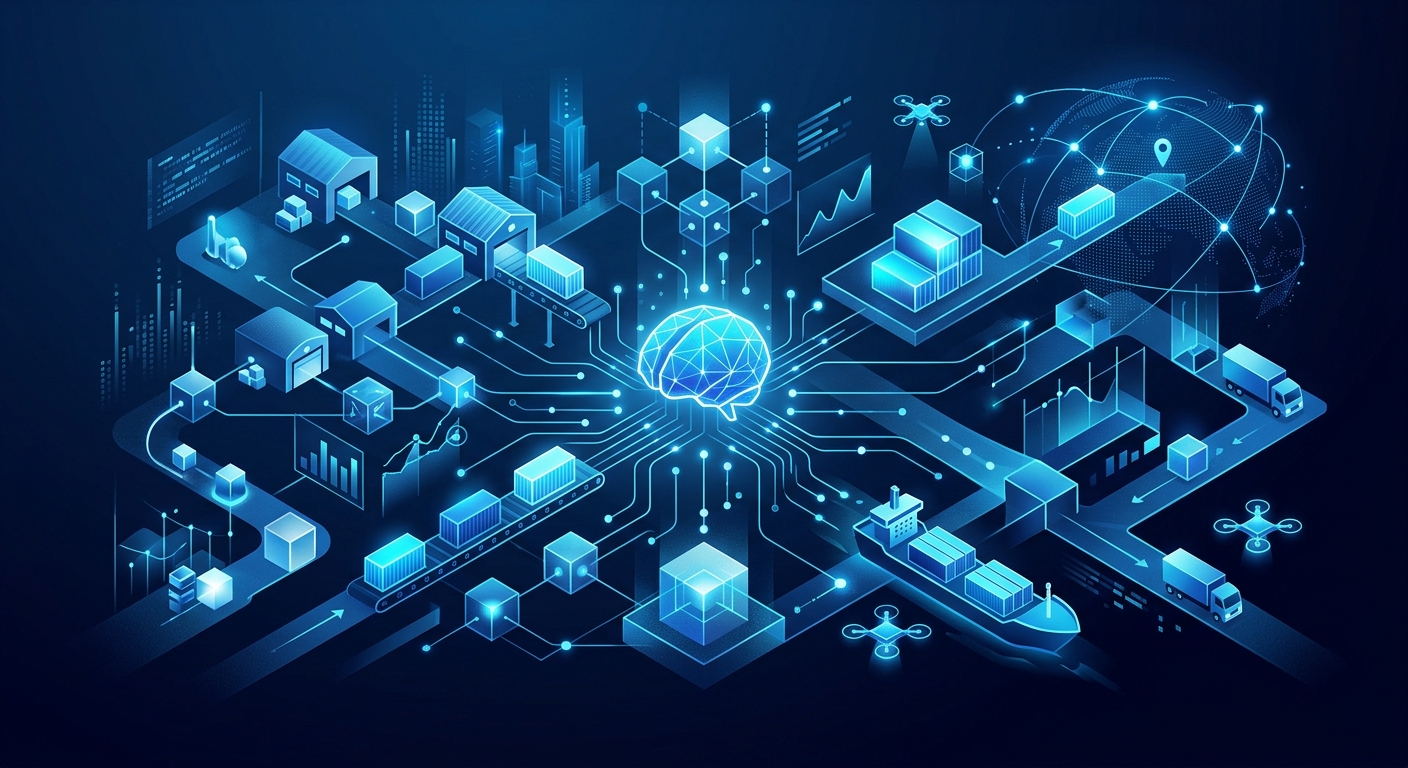
Artificial intelligence (AI) in supply chain management has transitioned from a high-level theoretical concept into a mature, foundational technology that is essential for modern business survival. As global markets face increasing volatility, the ability to process vast datasets and make real-time decisions has become the primary differentiator between market leaders and those struggling with legacy inefficiencies.
AI in supply chain management is defined as the application of advanced computing technologies—including machine learning, natural language processing, and neural networks—to automate decision-making processes, optimize logistics, and predict market shifts. By integrating these systems, organizations can move from reactive operations to a proactive, predictive posture that safeguards against disruptions.
Key Takeaways
- Integration is Essential: AI is no longer optional; it is a foundational element for modern supply chain resilience and sustainability.
- Efficiency Gains: Machine Learning (ML) is a core component used to reduce operational costs and improve decision-making speed.
- Smart Logistics: The combination of AI, IoT, and Big Data is the primary vehicle for achieving "Smart Logistics" and significant cost reductions.
- Resilience and Sustainability: AI-driven models are critical for fostering long-term supply chain stability and meeting ESG goals.
Abstract: The Evolution of AI in Logistics
The transformation of global trade is increasingly dictated by the maturity of digital technologies. Over the last decade, AI technologies have developed rapidly, reaching a state capable of catalyzing transformative business changes Artificial intelligence in supply chain management - ScienceDirect.com. While early applications were limited to basic automation, modern systems use deep learning to manage complexity that exceeds human cognitive capacity.
Research indicates that between 1998 and 2020, at least 150 peer-reviewed journal articles were published specifically on AI applications in SCM, signaling a robust academic and industrial foundation for these technologies Review Artificial intelligence applications in supply chain management. This historical growth has paved the way for the current era of autonomous procurement and predictive maintenance.
Keywords
Artificial Intelligence, Supply Chain Management, Machine Learning, Smart Logistics, Predictive Analytics, Demand Forecasting, IoT Integration, Supply Chain Resilience, Sustainability, Big Data.
Article Preview: Navigating the AI-Driven Supply Chain
In this guide, we explore the multifaceted role of AI in optimizing supply chain efficiency. We will examine how AI, combined with other advanced technologies such as Machine Learning (ML), the Internet of Things (IoT), and Big Data, enhances supply chain management, reduces costs, and improves operational efficiency The Role of Artificial Intelligence in Optimizing Supply Chain Efficiency in Smart Logistics.
From the abstract theoretical frameworks found in the International Journal of Production Economics to the practical implementation strategies used by global consultants like Deloitte, this article provides a roadmap for enterprise decision-makers. We will address critical gaps, such as how SMEs can compete without massive datasets and the legal frameworks governing autonomous procurement agents.
Artificial Intelligence: Definition and Taxonomy in SCM
To understand the impact of AI, one must first categorize its components within the logistics framework. Artificial Intelligence is a broad field of computer science focused on creating systems capable of performing tasks that typically require human intelligence. In the context of supply chain management, this taxonomy includes:
- Machine Learning (ML): Algorithms that improve through experience, used primarily for demand forecasting and route optimization.
- Natural Language Processing (NLP): Technologies that allow AI to read and interpret contracts, invoices, and shipping documents.
- Computer Vision: Used in AI Warehouse Automation for sorting, grading, and safety monitoring.
- Robotic Process Automation (RPA): Software "bots" that handle repetitive data entry and invoice exception handling.
According to Deloitte, AI helps combat complexity in modern supply chain operations by improving decision-making efficiency and providing visibility into multi-tier supplier networks.
Smart Logistics: The Convergence of AI, IoT, and Big Data
The most significant advancements in the field are occurring at the intersection of various technologies. AI is frequently combined with IoT and Big Data to enhance smart logistics systems The Role of Artificial Intelligence in Optimizing Supply Chain Efficiency in Smart Logistics. This convergence allows for a "digital twin" of the supply chain—a virtual replica that simulates real-world conditions to test scenarios before they occur.
| Technology Component | Role in Smart Logistics | Primary Benefit |
|---|---|---|
| IoT Sensors | Real-time tracking of temperature, location, and vibration. | Reduced spoilage and loss. |
| Big Data | Aggregation of historical sales, weather, and geopolitical data. | Enhanced predictive accuracy. |
| AI Algorithms | Processing data to identify patterns and anomalies. | Automated exception management. |
By applying these tools, companies can achieve a level of transparency that was previously impossible. This is particularly relevant for manufacturing and logistics sectors where timing and precision are critical for profitability.
Fostering Resilience and Sustainability through AI
Modern supply chains must be more than just efficient; they must be resilient and sustainable. The Yale School of Management emphasizes that AI integration is a primary strategy for fostering supply chain resilience and sustainability.
Key Insight: AI and IoT in supply chains are about more than cost-cutting: they create value through resilience and support sustainability in an unpredictable economy.
AI contributes to sustainability by optimizing routes to reduce fuel consumption and predicting demand more accurately to minimize overproduction and waste. Furthermore, AI systems can monitor supplier compliance with environmental standards, ensuring that the entire value chain adheres to ESG commitments.
Implementation Strategies for SMEs with Limited Data
A common misconception is that AI is only for giants like Amazon or Walmart. However, small-to-medium enterprises (SMEs) can implement AI even when they lack the massive datasets typically required for deep learning.
SMEs can overcome data limitations by using democratized access to generative AI, specifically through open-weight large language models like LLaMA. Additionally, they can integrate AI by utilizing existing third-party AI platforms that offer pre-trained models for common logistics tasks. Prioritizing robust data governance and management practices early on allows these smaller players to scale their AI capabilities as their data grows. This approach ensures that management occupations in smaller firms are augmented rather than replaced by technology.
Legal and Liability Frameworks in Autonomous Procurement
As AI agents take on more autonomous roles, such as executing procurement contracts without human intervention, legal questions arise. What happens when an AI makes a procurement error?
The current legal landscape includes the EU AI Act, which mandates strict transparency, and the AI Liability Directive, which shifts the burden of proof for autonomous harm from the victim to the deployer. Organizations must adopt specialized liability frameworks that include:
- Operational Logging: Comprehensive records of every decision made by the AI.
- Contractual Clauses: Explicitly allocating liability between the AI software provider and the end-user.
- Human-in-the-loop (HITL): Maintaining checkpoints where human oversight is required for high-value transactions.
Establishing these frameworks is a core part of best practices for automated regulatory change tracking agents.
Future Research and Emerging Trends
The future of AI in supply chain management lies in "Agentic AI"—systems that don't just recommend actions but execute them across complex environments. Future research is expected to focus on the ethical implications of autonomous logistics and the energy costs associated with large-scale model training.
While energy metrics for specific supply chain optimizations are still being refined, general AI energy consumption is measured through Power Usage Effectiveness (PUE) and carbon emissions. As companies strive for net-zero, balancing the computational cost of AI with the efficiency gains it provides will be a major area of academic and corporate study.
Frequently Asked Questions
1. How does AI help in demand forecasting?
AI uses machine learning to analyze historical sales data, seasonal trends, and external factors like weather or economic shifts to predict future product demand with much higher accuracy than traditional statistical methods.
2. Can AI replace human supply chain managers?
AI is designed to augment human decision-making by handling data-heavy tasks. While it may automate certain roles, such as weighers and measurers, it creates a need for managers who can oversee AI strategy and exception handling.
3. What is the biggest barrier to AI adoption in SCM?
Most organizations cite data silos and poor data quality as the primary obstacles. AI requires clean, integrated data from across the entire supply chain to function effectively.
4. Is AI in supply chain management expensive to implement?
While initial costs for custom solutions can be high, the rise of SaaS-based AI platforms and open-source models has significantly lowered the barrier to entry for most enterprises.
5. How does AI improve warehouse safety?
Computer vision and AI-powered robotics can monitor warehouse floors in real-time to identify safety hazards, predict equipment failure, and ensure that employees are following safety protocols.
6. Does AI help with global trade compliance?
Yes. AI can automatically scan and verify shipping documents against international trade regulations, reducing the risk of fines and delays at customs.