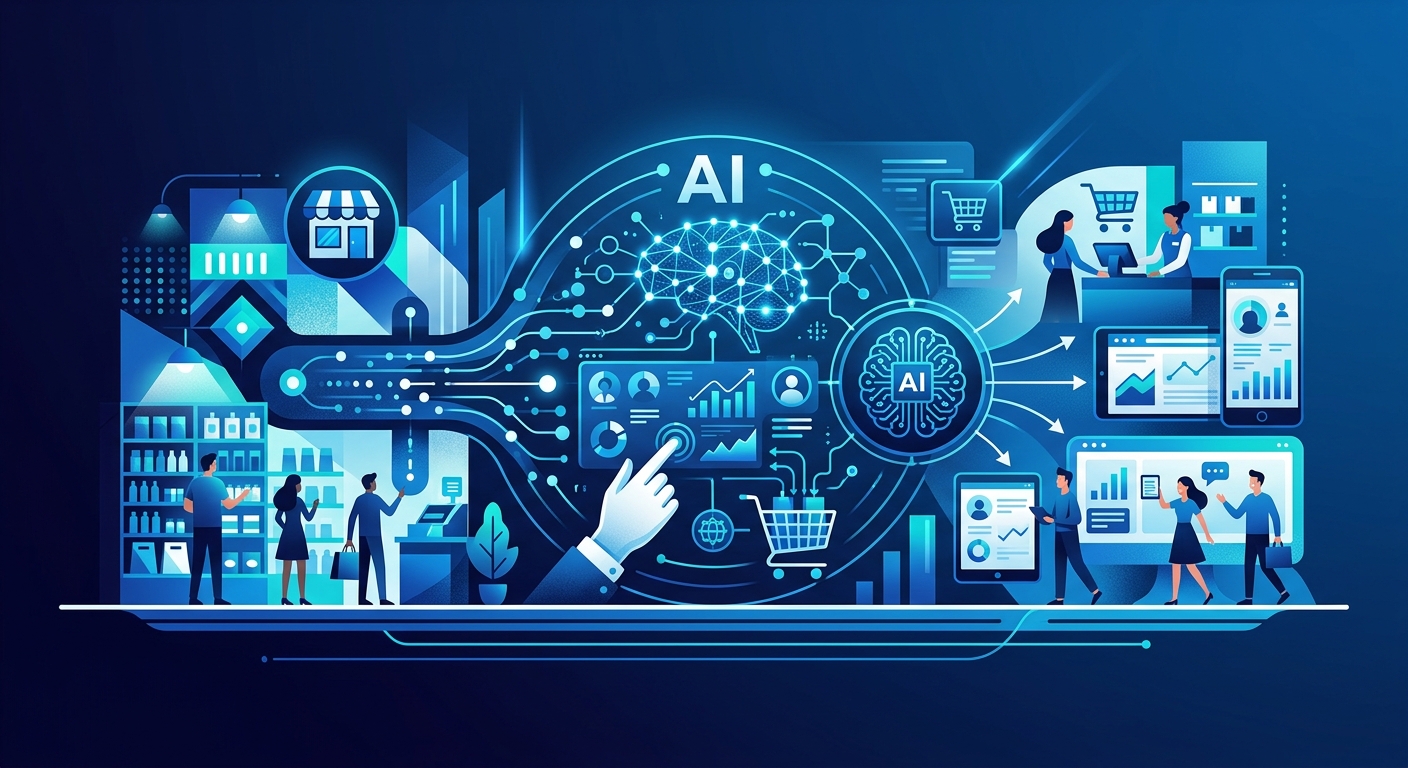
Retail AI solutions are specialized software systems and algorithmic frameworks designed to automate, optimize, and personalize the end-to-end retail value chain. In the modern enterprise, these solutions have evolved from simple rule-based bots into sophisticated neural networks capable of predicting consumer demand with surgical precision. By integrating computer vision, natural language processing (NLP), and machine learning (ML), retail AI solutions allow organizations to bridge the gap between digital data and physical store operations.
Key Takeaways
- Strategic Alignment: Successful AI scaling requires a business-first approach rather than a technology-led pilot, ensuring that algorithms solve specific commercial friction points.
- Operational Efficiency: AI-driven predictive maintenance and logistics can improve efficiency by up to 25%, particularly within complex supply chains.
- Human Factor: Approximately 70% of retailers identify user adoption and organizational change management as the primary hurdles to successful AI implementation.
- Governance: Adopting frameworks like the NIST AI Risk Management Framework is essential for maintaining consumer trust and data security.
What Are Retail AI Solutions?
Retail AI solutions is a broad term encompassing the software, hardware, and data architectures that use artificial intelligence to enhance retail operations. These systems are no longer confined to the back office; they now power the entire lifecycle of a product, from the moment of raw material procurement to the final checkout experience.
In the context of AI in Retail: Applications & Business Impact, these solutions function as an intelligent layer that sits atop existing ERP and POS systems. They process vast datasets—including historical sales, weather patterns, and social media trends—to generate actionable insights. For example, a modern retail AI solution might identify that a specific SKU is likely to sell out in three days based on local event data, automatically triggering a replenishment order before the stock-out occurs.
Table of Contents
- How I Evaluate Retail AI Solutions
- Why Trust Our Software Reviews
- Core Features of Enterprise Retail AI
- Key Benefits for Modern Retailers
- How to Choose Retail AI Solutions
- Costs and Pricing Models
- Future Trends: What's Next
- Frequently Asked Questions
Why Trust Our Software Reviews
At Meo Advisors, our methodology for reviewing retail technology goes beyond marketing material. We analyze technical documentation, API flexibility, and the scalability of the underlying infrastructure, with particular attention to the migration path from legacy on-premise systems to cloud-native Retail AI and Voice Agent Solutions.
We prioritize solutions that demonstrate a clear path to ROI and offer robust AI Agent Data Privacy Compliance. Our reviews are independent, focused on the enterprise's ability to maintain these systems without requiring a large, permanent increase in technical headcount.
How I Evaluate Retail AI Solutions
Evaluating a retail AI solution requires looking past the "black box" of the algorithm to the practicalities of the business environment. When assessing a vendor, we use a four-pillar framework:
- Algorithmic Transparency: Can the system explain its decisions? In high-stakes environments like inventory management, "black box" models are a liability.
- Integration Capability: Does the solution integrate with legacy Point of Sale (POS) systems? For systems lacking modern APIs, we look for solutions that offer custom middleware bridges.
- Scalability: Can the model maintain its accuracy as the dataset grows from one store to a thousand?
- User Adoption Support: Does the vendor provide tools for change management? As noted by BCG X, user adoption is often the single greatest barrier to success.
"Retailers often cite user adoption and change management as the biggest barriers to AI. We take a business-first, algorithm-backed approach, redesigning processes and aligning structure, roles, and skills to drive lasting, scalable change." — BCG X, Innovative Retail Intelligence Software (BCG X)
Essential Features of Enterprise Retail AI
To move beyond the pilot phase, enterprise-grade retail AI solutions must include several non-negotiable features:
- Predictive Demand Forecasting: Moving beyond simple linear regression to account for external variables like local macroeconomic shifts.
- Computer Vision for Inventory: Real-time shelf monitoring that identifies out-of-stock items or misplaced products via in-store cameras.
- Dynamic Pricing Engines: Algorithms that adjust prices in real time based on competitor activity, inventory levels, and demand elasticity.
- Hyper-Personalization: Engines that deliver unique offers to individual customers based on their specific browsing and purchase history, effectively Scaling Loyalty.
| Feature | Primary Function | Business Impact |
|---|---|---|
| Demand Sensing | Real-time signal processing | Reduces overstock by 15-20% |
| NLP Chatbots | Automated customer service | Lowers support costs by 30% |
| Predictive Logistics | Route and load optimization | 25% efficiency gain in supply chain |
| Vision Analytics | Foot traffic & heat mapping | Optimizes store layout for higher conversion |
Benefits of Retail AI Solutions
The primary benefit of implementing retail AI is the transition from reactive to proactive management. According to research published in Springer Nature, AI-driven optimization of supply chain and logistics can lead to a 25% improvement in efficiency through predictive maintenance and operational bottleneck identification.
Beyond logistics, these solutions solve the "data silo" problem. By aggregating data from e-commerce platforms, physical stores, and social media, AI creates a single source of truth for the customer journey. This leads to higher conversion rates and increased customer lifetime value (CLV) because the retailer can meet the customer with the right product at the exact moment of intent.
How to Choose Retail AI Solutions
Choosing the right partner involves more than comparing feature lists. Decision-makers must evaluate the vendor's alignment with their specific sub-sector of retail. A solution optimized for fast-fashion apparel will have vastly different data requirements than one designed for big-box grocery stores.
- Step 1: Define the Use Case. Avoid the temptation to "do AI" everywhere. Focus on one high-impact area, such as AI Agents For Invoice Exception Handling.
- Step 2: Audit Your Data. AI is only as good as the data it consumes. Ensure your data is clean, structured, and accessible.
- Step 3: Evaluate Compliance. Ensure the vendor adheres to the NIST AI Risk Management Framework to mitigate risks related to bias and security.
Costs and Pricing Models
Retail AI solutions typically follow one of three pricing structures:
- SaaS Subscription: A monthly or annual fee based on the number of users or stores. This is common for CRM and marketing AI.
- Consumption-Based: Pricing based on the volume of data processed or the number of API calls. This is typical for Retail AI Chatbot & Voice Agent Solutions.
- Outcome-Based: A newer model where the vendor takes a percentage of the proven lift in revenue or savings generated. This aligns incentives between the retailer and the technology provider.
Key Insight: While initial implementation costs can be high, the long-term ROI is often realized through a 10-15% reduction in operational overhead within the first 18 months of full-scale deployment.
Challenges We Solve: The Legacy Integration Gap
A significant challenge for many retailers is the presence of legacy Point of Sale (POS) systems that lack modern API capabilities. Integrating AI into these environments typically requires a custom discovery phase and the development of middleware bridges.
Furthermore, the "70% people transformation" requirement—where the majority of a project's success depends on people and process changes rather than the code itself—is a major hurdle. Organizations that succeed often use frameworks like the ADKAR model or Kotter's 8-Step Process to ensure that store managers and associates actually use the AI tools provided to them.
What's Next: The Future of Autonomous Retail
Looking toward 2026 and beyond, the industry is moving toward "Autonomous Retail Operations." This goes beyond simple automation to a state where the AI system can make and execute decisions with minimal human oversight. We expect to see a surge in Agentic Enterprise patterns, where autonomous agents manage vendor negotiations, handle complex logistics exceptions, and conduct autonomous outreach via Enterprise AI SDRs.
Frequently Asked Questions
How does AI improve retail inventory management?
AI uses historical data and real-time signals to predict demand more accurately than traditional methods, reducing both stock-outs and overstock situations.
Are retail AI solutions compliant with GDPR/CCPA?
Compliance depends on the implementation. Systems using facial recognition or movement tracking must conduct Data Protection Impact Assessments (DPIAs) to ensure they meet the latest privacy standards.
Can AI integrate with old POS systems?
Yes, but it often requires custom middleware. If the legacy system does not support open APIs, a discovery phase is needed to build a custom data bridge.
What is the NIST AI Risk Management Framework?
It is a voluntary framework designed by the National Institute of Standards and Technology to help organizations manage the risks associated with AI, focusing on safety, security, and bias.
How long does it take to see ROI from retail AI?
Most enterprise retailers report a measurable return on investment within 12 to 18 months, depending on the complexity of the integration and the scale of the deployment.
Does AI replace retail workers?
While AI automates repetitive tasks, it primarily shifts the workforce toward more high-value, customer-facing roles. For more on this, see our report on Jobs Replaced by AI.