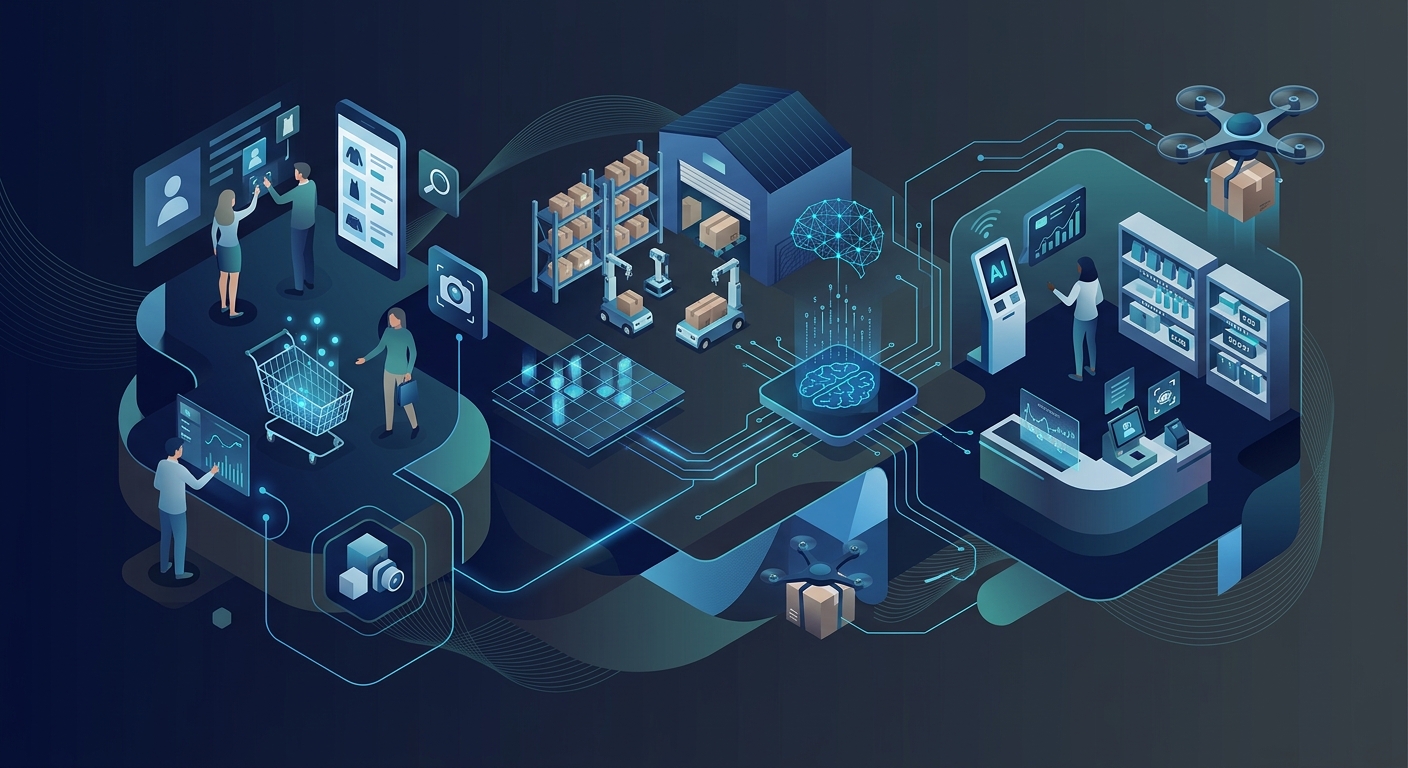
Artificial Intelligence (AI) has evolved from a speculative back-office tool into the primary engine for growth in the modern retail sector. Retailers are no longer just selling products; they are managing complex data ecosystems where AI determines pricing, predicts demand, and personalizes every touchpoint of the customer journey. For enterprise leaders, understanding how AI is used in retail is critical for maintaining margins in an increasingly competitive global market.
Key Takeaways
- Dynamic Pricing: Approximately 73% of retail executives plan to use AI for price optimization by 2025 to manage razor-thin margins.
- Loss Prevention: AI-driven computer vision is essential for reducing shrinkage, which costs U.S. retailers over $110 billion annually.
- Hyper-Personalization: Generative AI and machine learning enable real-time recommendation engines that significantly increase average order value (AOV).
- Operational Efficiency: AI-driven supply chain management predicts stockouts by analyzing external variables like weather patterns and social media trends.
What Is AI in Retail?
AI in retail refers to the application of machine learning (ML), computer vision, natural language processing (NLP), and generative AI to automate operations and enhance the consumer experience. It represents a shift from reactive business models to proactive, data-driven strategies. By processing vast datasets—ranging from historical sales to real-time foot traffic—AI systems provide actionable insights that human analysts cannot produce at scale.
According to Census Bureau data, the retail and information sectors show the highest rates of AI adoption among all U.S. business sectors surveyed in 2024. This rapid adoption is driven by the need for efficiency in high-volume, low-margin environments. When we ask how AI is used in retail, we are looking at a technology stack that integrates with every facet of the business, from the warehouse floor to the mobile app interface.
The Benefits of AI in the Retail Sector
The primary benefit of AI in retail is the ability to achieve high efficiency while simultaneously improving the customer experience. Traditional retail models often face a trade-off between cost-cutting and service quality; AI reduces this friction.
- Margin Protection: Through dynamic pricing, retailers can adjust prices in real-time based on demand, competitor activity, and inventory levels. This ensures that products are priced to move while protecting the bottom line.
- Reduced Operational Waste: AI-driven supply chain management predicts stockouts before they occur, reducing the capital tied up in excess inventory.
- Enhanced Customer Loyalty: By applying sentiment analysis to customer reviews, brands can inform product development and inventory procurement strategies that align with consumer preferences.
Key Insight: For retailers, AI is becoming core infrastructure for handling complex consumer expectations and supply chain volatility (NIST AI Research).
Key AI Technologies in Retail Customer Service
Customer service has been transformed by the integration of AI agents and natural language processing. These technologies enable 24/7 support without the overhead of large call centers. Retailers are increasingly deploying Retail AI Chatbot & Voice Agent Solutions to handle routine inquiries, such as tracking orders or processing returns.
Key technologies include:
- Natural Language Processing (NLP): Enables bots to understand the intent and sentiment behind customer queries.
- Generative AI: Produces human-like responses that can guide a customer through a complex purchase process, such as selecting the right size or style.
- Voice AI: Used in both phone-based support and in-store interactive kiosks to provide hands-free assistance.
How AI Customer Service Is Used in Retail Environments
In practice, AI customer service bridges the gap between digital and physical shopping. For example, a customer may start a conversation with an AI agent on a mobile app to check in-store availability. The AI not only confirms the stock but can also reserve the item and provide a QR code for pickup.
Furthermore, retailers use AI to perform sentiment analysis on customer interactions. By analyzing the tone and word choice in thousands of chat logs, AI can identify emerging product issues or shifts in consumer sentiment before they affect the broader brand reputation. This allows human teams to intervene quickly when necessary.
Use Cases for AI-Driven Loss Prevention and Shrinkage
One of the most pressing challenges in physical retail is shrinkage—the loss of inventory due to theft, fraud, or error. This is a critical area where computer vision technology delivers immediate ROI.
Key Insight: Retailers in the United States lose over $110 billion annually due to shrinkage caused by shoplifting, vendor fraud, and employee theft. Oracle Retail and NetSuite report that AI-monitored surveillance can reduce these losses by up to 30% through real-time anomaly detection.
Hardware Requirements for Shrinkage Detection
To implement these systems, retailers must upgrade their infrastructure. This often includes:
- GPU-Enabled Cameras: High-definition cameras with onboard processing power to analyze video feeds locally (edge computing).
- Edge Computing Sensors: Devices equipped with NPUs (Neural Processing Units) that can identify suspicious behavior patterns without sending large amounts of data to the cloud.
- Weight Sensors: Integrated into shelving to detect when multiple high-value items are removed simultaneously, triggering an alert for floor staff.
Personalizing the Customer Journey with AI
Personalization is the cornerstone of modern e-commerce. AI algorithms analyze browsing history, past purchases, and social media trends to create a unique storefront for every user. This is often referred to as "Segment of One" marketing.
| Application | Technology Used | Business Impact |
|---|---|---|
| Virtual Try-On | Generative AI & AR | Reduces return rates by 25% |
| Recommendation Engines | Deep Learning | Increases cross-sell revenue by 15–20% |
| Dynamic Email Content | Predictive Analytics | Improves Click-Through Rate (CTR) by 40% |
| In-Store Layout Optimization | Heatmap Computer Vision | Increases dwell time and impulse purchases |
For enterprise-level implementation, AI in Retail: Applications & Business Impact details how these systems integrate with existing CRM data to provide a 360-degree view of the customer.
Calculating ROI: The Break-Even Point for Small Retailers
While enterprise organizations have the capital for large AI deployments, small-to-medium retailers must be more deliberate. To calculate the break-even point for an initial AI investment, businesses must examine the "contribution margin"—the price per unit minus variable costs.
If an AI tool for inventory management costs $50,000 to implement and reduces waste by $5,000 per month, the break-even point is reached in 10 months. However, the real value often lies in "hidden" ROI: increased customer lifetime value (LTV) and the prevention of stockouts that drive customers to competitors. For more on calculating these figures, see our guide on Measuring AI Agent ROI.
Legal and Ethical Frameworks for In-Store AI
As retailers deploy facial recognition and behavioral AI, they must navigate a complex set of privacy laws such as the GDPR in Europe and CCPA in California.
Legal Compliance Checklist:
- Explicit Consent: Moving beyond simple signage to digital opt-ins for biometric tracking.
- Data Minimization: Ensuring that AI systems process only the data necessary for the specific function (e.g., detecting a theft gesture without storing the person's identity).
- Regular Audits: Implementing Continuous AI Agent Monitoring to ensure algorithms do not develop biases against specific demographic groups.
The Future of AI in Retail: Autonomous Environments
The future of retail lies in the "Just Walk Out" experience. Using sensor fusion and computer vision, stores can eliminate the checkout line entirely. Customers enter, select items, and are automatically charged as they exit. This technology is already moving from experimental convenience stores to large-format grocery and apparel retailers. As the cost of edge AI hardware continues to drop, autonomous retail environments will become the standard for brick-and-mortar efficiency.
Frequently Asked Questions
How does AI help with retail inventory management?
AI analyzes historical sales data, seasonal trends, and external factors like weather to predict future demand. This allows retailers to maintain optimal stock levels, reducing both overstock and stockouts.
Can AI reduce retail theft?
Yes. Computer vision systems can identify suspicious behavior in real-time and alert security personnel, significantly reducing shrinkage from shoplifting and employee theft.
Is AI in retail expensive to implement?
While initial costs for hardware and integration can be high, many AI solutions are now available as SaaS (Software as a Service), making them accessible to medium-sized businesses with lower upfront capital requirements.
How does AI improve the customer experience?
AI provides personalized product recommendations, faster customer support via chatbots, and frictionless checkout experiences, making shopping more convenient and tailored to individual needs.
What are the privacy concerns with AI in stores?
Concerns primarily involve the use of facial recognition and the collection of biometric data. Retailers must comply with local privacy laws and be transparent about how data is stored and used.
Does AI replace retail workers?
AI typically shifts the nature of retail work. While it may automate routine tasks like checkout or inventory counting, it creates demand for roles focused on customer experience and technology management. See our analysis on Jobs Replaced by AI for more details.