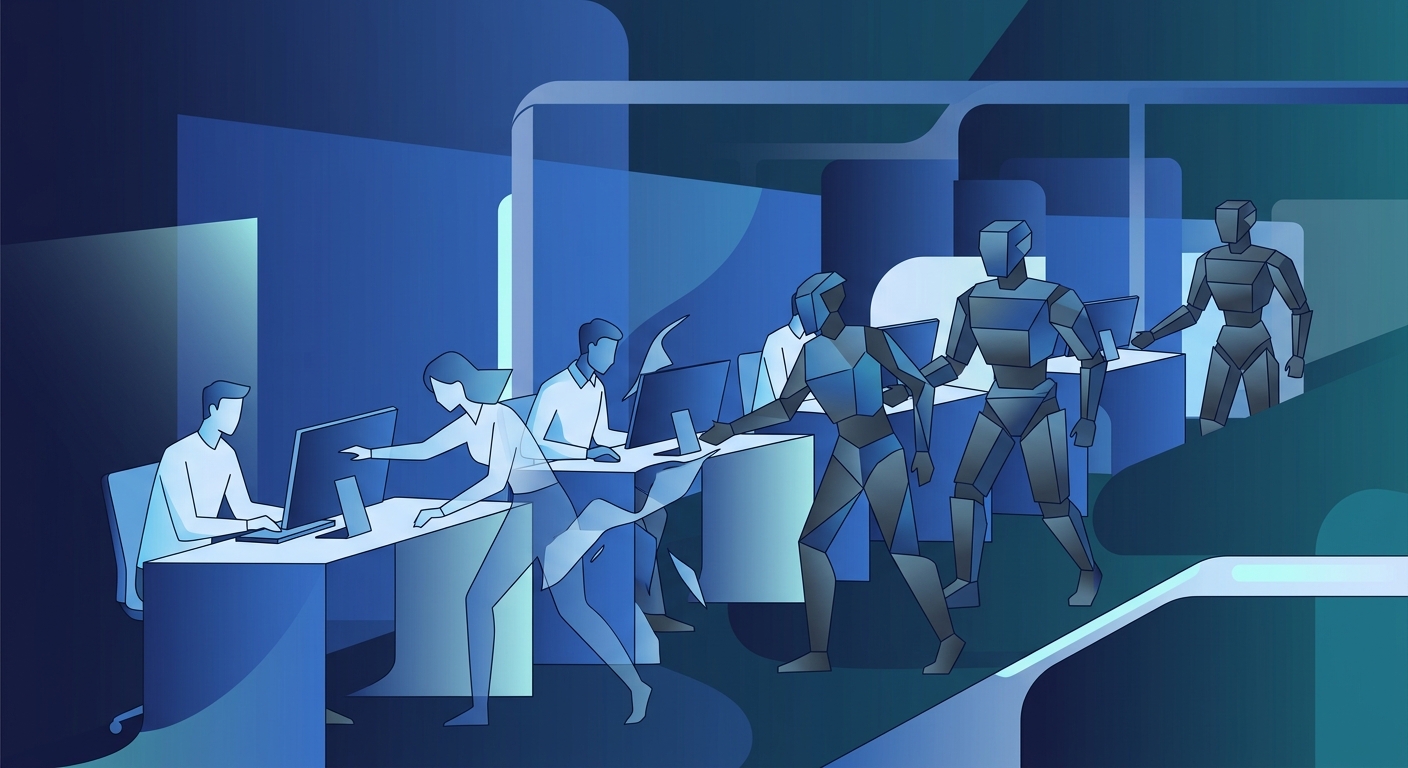
The question "will robots take my job" has evolved from a science fiction trope into a central concern for the modern workforce. As artificial intelligence (AI) and advanced robotics become more integrated into the enterprise, the anxiety surrounding displacement is real. According to a Eurobarometer survey, 72% of Europeans believe that robots and AI steal people's jobs. This sentiment reflects a global trend of automation anxiety that spans industries from manufacturing to high-level data analysis.
However, the reality of the "new automation" is more nuanced than a simple replacement of humans by machines. While robots certainly displace certain roles—particularly those involving repetitive tasks—they also serve as a catalyst for firm efficiency and productivity. Understanding your specific automation risk requires looking beyond the headlines and examining the data on job growth, task exposure, and the emerging model of human-machine collaboration.
Key Takeaways
- Augmentation over Replacement: Most experts agree that AI will reshape more jobs than it entirely replaces, acting as a tool for human enhancement.
- High-Growth AI-Proof Roles: Careers in healthcare, specialized trades, and mental health are projected to see significant growth through 2032 due to their reliance on human empathy and non-repetitive manual skills.
- The "New Automation" Shift: Unlike previous industrial revolutions, current AI technology is beginning to impact high-skilled roles and college graduates.
- Strategic Upskilling: Transitioning to roles that focus on human-machine interaction, such as AI orchestration and data oversight, is the primary hedge against displacement.
Which Jobs Are Safest from AI and Automation?
Jobs safest from AI automation are those that require high levels of emotional intelligence, complex physical dexterity in unpredictable environments, and high-stakes decision-making. These roles are often called "AI-proof" because they involve tasks that machines currently cannot replicate with the same level of nuance as a human.
U.S. Career Institute identifies that careers with low risk often involve non-repetitive manual labor or high-level human interaction. For example, a Mental Health Counselor is a role defined by empathy and the ability to interpret subtle social cues—traits that generative AI lacks. Similarly, Occupational Therapists must navigate physical spaces and human emotions at the same time, making their roles extremely difficult to automate.
Key characteristics of AI-safe jobs include:
- Complex Problem Solving: Tasks that do not have a single "correct" answer and require creative synthesis.
- Physical Dexterity: Roles like plumbers or electricians who work in varied, non-standardized physical environments.
- Human Connection: Roles in Community and Social Service Occupations where the human element is the primary service provided.
Which AI-Proof Job Is Projected to Grow the Most?
When evaluating the future of work, it is not enough for a job to be "safe"; it must also be in demand. According to data analyzed by the U.S. Career Institute, the AI-proof job projected to grow the most is Nurse Practitioners, with a projected growth rate of 44.5% by 2032.
This growth is driven by an aging population and a shift toward preventative care, areas where human practitioners are indispensable. While AI can assist in diagnostic imaging or patient data sorting, the actual delivery of care and clinical judgment remains a human-centered task. Other high-growth, low-risk roles include Physician Assistants and Information Security Analysts, the latter of which highlights a critical trend: as we use more AI, we need more humans to secure the systems that run it.
The 10 AI-Proof Jobs With the Highest Projected Growth by 2032
To provide a clearer picture of where the opportunities lie, we have compiled a list of roles that combine low automation risk with high market demand. These figures are based on Bureau of Labor Statistics (BLS) projections through 2032.
| Job Title | Projected Growth Rate (2022-2032) | Why It Is AI-Proof |
|---|---|---|
| Nurse Practitioners | 44.5% | Requires clinical judgment and physical patient care. |
| Physician Assistants | 26.5% | High-level medical decision-making and patient interaction. |
| Physical Therapists | 15.1% | Requires physical manipulation and personalized rehab plans. |
| Mental Health Counselors | 18.0% | Deep emotional intelligence and therapeutic rapport. |
| Occupational Therapists | 11.5% | Complex physical tasks in non-standard environments. |
| Electricians | 6.0% | Manual dexterity in unpredictable job sites. |
| Veterinarians | 19.0% | Requires handling animals and medical intuition. |
| Speech-Language Pathologists | 19.0% | Highly specialized human communication training. |
| Software Developers | 25.0% | Creative coding and complex system architecture. |
| Information Security Analysts | 32.0% | Defending against evolving, AI-driven cyber threats. |
The 65 AI-Proof Jobs and How Much They Are Projected to Grow
Beyond the top 10, there is a broad spectrum of 65 roles identified as having a low probability of automation. These span various sectors, including Healthcare Practitioners, education, and skilled trades.
For instance, Firefighters and First Line Supervisors of Police and Detectives have automation risks near zero percent because their work involves life-or-death decisions in chaotic environments. In the creative sector, Arts, Design, and Media Occupations remain resilient when they focus on original storytelling and cultural nuance, though they face more pressure from generative AI than physical trades do.
SNHU notes that while the numbers are encouraging for these fields, workers must still remain adaptable. Even "safe" jobs will see their peripheral tasks—like scheduling or documentation—automated, allowing the human worker to focus more on their core specialty.
Human-Machine Interaction: Mechanization or Empowerment?
The debate over whether robots "take" jobs often ignores the concept of augmentation. In many enterprises, AI is not a replacement but a tool that empowers workers to perform at higher levels. This is frequently seen in Enterprise AI Agent Orchestration, where AI handles the logistics while humans provide the strategic direction.
"Overall, robots have a mixed effect: replacing jobs that relatively high-wage manufacturing employees used to perform, while also making firms more efficient and more productive." — Daron Acemoglu, Institute Professor at MIT (MIT Sloan)
This "mixed effect" suggests that while some roles disappear, the increased productivity of the firm often leads to the creation of new, different roles within the same organization. The challenge for the worker is shifting from being a "task-doer" to a "system-overseer."
Disproportionate Impacts: Who Is Most at Risk?
Automation does not affect all demographics equally. Historical data shows that the displacement effect of robots is particularly large in industrial regions, such as the U.S. Midwest. Research from Knowledge at Wharton indicates that robots are taking over many low-skilled jobs, which can lead to significant socioeconomic shifts and even influence political outcomes.
Furthermore, the "new automation" differs from the past. Brookings Institution points out that advanced AI has the potential to cause much more worker displacement among college graduates and professionals than older generations of automation did. This means that having a degree is no longer an absolute shield against automation risk.
Human Replacement Is Not the Main Threat
The primary threat to most workers is not a robot taking their entire job, but rather a loss of wage growth and the "hollowing out" of middle-skill roles. When AI automates 30% of a job's tasks, the employer may not fire the worker, but they may not hire a second person when the workload increases.
To stay competitive, workers should focus on human-first skills. These include:
- Emotional Intelligence (EQ): Managing people and navigating workplace dynamics.
- Strategic Reasoning: Understanding the why behind a business decision, not just the how.
- Cross-Disciplinary Synthesis: Combining insights from different fields to solve a unique problem.
For those in high-risk industries, moving into roles that involve Continuous AI Agent Monitoring or compliance oversight, such as Automated Regulatory Change Tracking, represents a viable path toward long-term career security.
Frequently Asked Questions
1. Will AI eventually replace all human jobs?
No. While AI can automate tasks, it lacks the consciousness, ethics, and physical presence required for many roles. Most economists predict a shift in the nature of work rather than a total disappearance of it.
2. Which industries are most vulnerable to AI?
Manufacturing, transportation, and administrative support are high-risk. However, white-collar roles in finance and legal research are also seeing increased automation of routine cognitive tasks.
3. How can I find out my job's automation risk?
Resources like the U.S. Career Institute provide lists of jobs with low risk. Generally, if your job involves high repetition and low social interaction, the risk is higher.
4. Is the government doing anything to protect workers from AI?
There are ongoing debates about "robot taxes" and universal basic income (UBI). Some legislative proposals focus on funding career retraining for displaced workers to help them transition into the agentic enterprise economy.
5. Does age affect automation risk?
While data is still emerging, senior managers often face less risk than junior employees because their roles require more complex decision-making and personnel management, whereas entry-level roles often involve the repetitive tasks AI excels at.
6. Should I learn to code to stay AI-proof?
Not necessarily. While AI literacy is important, soft skills like leadership and communication are becoming even more valuable as AI takes over technical tasks like basic coding.
Conclusion
The question "will robots take my job" does not have a single answer, but the data suggests that those who adapt will thrive. By focusing on roles that require human empathy, complex physical work, or strategic oversight, you can protect yourself from the most disruptive effects of automation. The future of work is not a battle between humans and machines, but a transition toward a more efficient, augmented workforce where human ingenuity remains the most valuable asset.