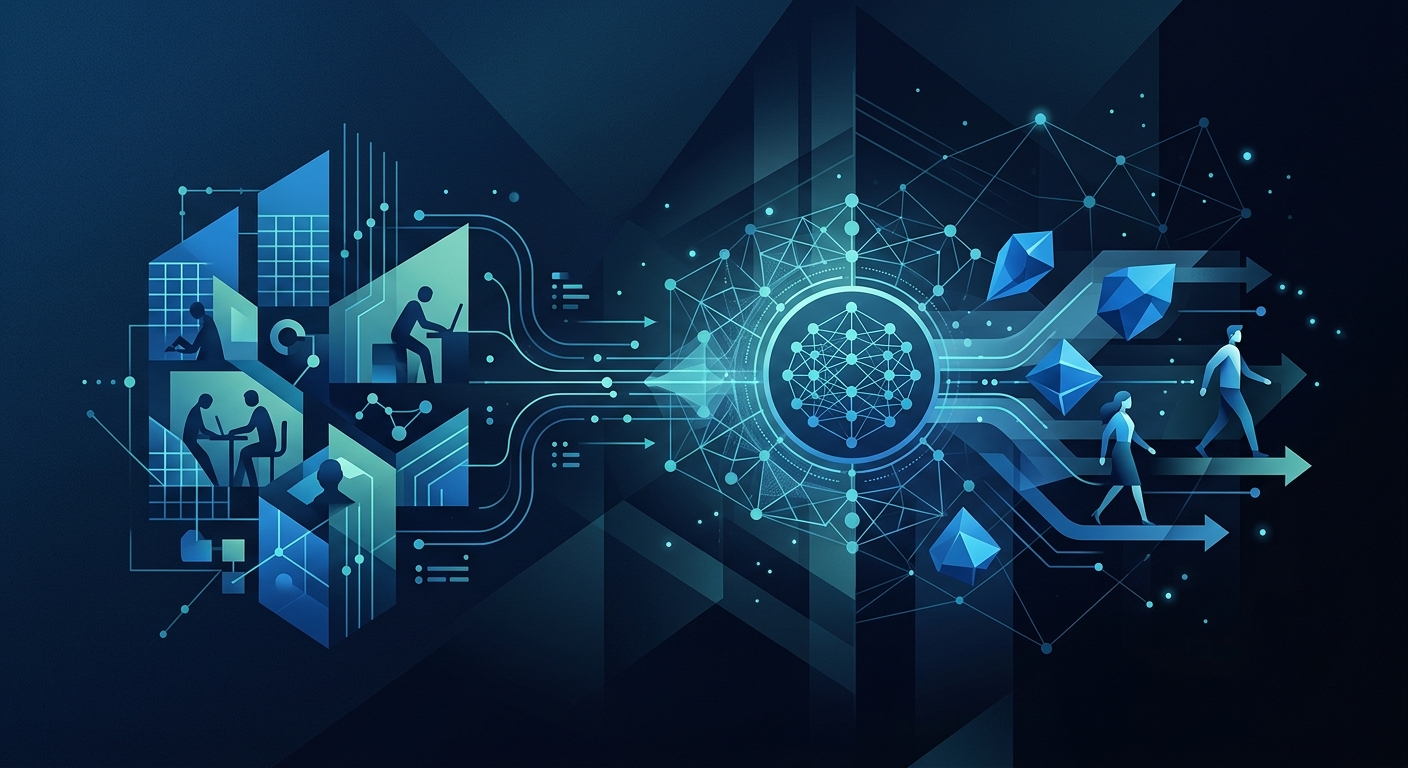
Understanding How AI is Reshaping the Global Workforce
Artificial Intelligence (AI) is a suite of technologies that enables machines to perform tasks that typically require human intelligence, such as visual perception, speech recognition, decision-making, and language translation. As these systems move from experimental tools to core business infrastructure, the question of which jobs are affected by AI has become the central concern for enterprise leaders and policymakers alike.
Recent data suggests we are entering a period of profound structural change. While early automation focused on physical labor, generative AI now targets cognitive tasks. According to a working paper coauthored by Harvard Business School researchers, job postings for occupations involving structured and repetitive tasks decreased by 13% following the launch of ChatGPT, while demand for analytical and creative roles grew by 20% Enhance or Eliminate? How AI Will Likely Change These Jobs.
Key Takeaways
- Global Displacement Scale: AI could potentially replace the equivalent of 300 million full-time jobs globally by 2030, according to Goldman Sachs.
- The 23% Embedding Factor: By 2026, AI will be embedded in the day-to-day activities of 23% of all professional roles, serving as a collaborator rather than a replacement.
- Growth in High-Cognition Sectors: Demand for data scientists, information security analysts, and healthcare managers is projected to grow through 2034.
- Organizational Flattening: Roughly 45% of organizations with extensive AI adoption expect to reduce middle management layers as AI agents take over coordination tasks.
How Artificial Intelligence Will Change the World of Work
AI is not merely a tool for efficiency; it is a fundamental shift in how value is created. In the next decade, the "Agentic Enterprise" will emerge, where AI agents handle complex workflows. This transition means that human workers will shift from being the primary "doers" of tasks to the primary "orchestrators" of systems.
This evolution involves three distinct phases: automation (doing the same thing faster), augmentation (doing things better with AI assistance), and invention (doing things that were previously impossible). For enterprise leaders, this requires a move toward The Agentic Enterprise model, where human-AI collaboration defines the competitive edge.
"AI will become embedded in the day-to-day activities of 23% of jobs, reshaping how tasks are performed, but not fundamentally altering how work is structured. Workers will be expected to use AI to improve efficiency, accuracy, and decision making." — BCG, AI Will Reshape More Jobs Than It Replaces
How Many Jobs Will AI Replace by 2030?
Projecting the exact number of jobs affected by AI involves analyzing both task displacement and job creation. Goldman Sachs estimates that AI could replace up to 300 million full-time jobs globally How will Artificial Intelligence Affect Jobs 2026-2030. This figure represents roughly a quarter of current work tasks across various industries that could be automated by generative AI.
However, replacement is rarely a 1:1 ratio. While 300 million roles face displacement, the productivity gains from AI are expected to boost global GDP by 7% over ten years. This economic expansion historically creates new occupations that did not exist before the technology. For instance, demand for Computer and Mathematical Occupations is expected to surge as companies require more personnel to build, maintain, and secure AI frameworks.
What Jobs Are Most Likely to Be Automated?
Automation potential is highest in roles characterized by repetitive cognitive tasks and high-volume data processing. The Harvard Business School study highlights that roles involving "structured" work—such as basic data entry, routine legal research, and technical writing—have already seen a 13% decline in job postings Enhance or Eliminate?.
Key sectors at risk include:
- Administrative Support: Scheduling, filing, and basic customer service inquiries.
- Legal Services: Document review and contract drafting for standard agreements.
- Finance and Accounting: Invoice processing and basic audit tasks (see AI Agents For Invoice Exception Handling).
- Content Production: Basic copywriting and SEO metadata generation.
Which Jobs Will Not Be Replaced by AI?
Jobs that require high levels of emotional intelligence, physical dexterity in unpredictable environments, and complex strategic judgment remain the most resilient. According to BCG, roles that involve the physical presence of a human worker or interpersonal interaction are least likely to be fully replaced AI Will Reshape More Jobs Than It Replaces.
Resilient roles include:
- Healthcare Practitioners: While AI can assist in diagnosis, the "bedside manner" and physical intervention in Healthcare Occupations remain human-centric.
- Skilled Trades: Plumbers, electricians, and carpenters work in non-standardized physical spaces that current robotics cannot navigate efficiently.
- Community and Social Services: Roles in Community and Social Service require empathy and nuanced cultural understanding that AI lacks.
- Strategic Leadership: High-stakes decision-making involving ethical considerations and long-term vision.
The Legal and Liability Gap: Who Is Responsible for AI Errors?
One of the most significant gaps in current discourse is the framework for professional liability. When a doctor uses an AI diagnostic tool and it misses a tumor, or an engineer uses AI-generated calculations that lead to a structural failure, who is at fault?
Currently, there is no single legal framework for AI liability. Instead, existing structures such as medical malpractice and product liability are being adapted. Legal experts are proposing a "shared responsibility model." In this model, liability is distributed among the practitioner, the healthcare facility, and the AI developer based on their role in the decision-making process. For enterprise leaders, implementing AI Agent Audit Trail Best Practices is critical for maintaining accountability and transparency in these high-stakes scenarios.
Restructuring Entry-Level Roles for Future Leaders
A critical challenge for the modern enterprise is the erosion of "stepping stone" roles. Traditionally, junior employees learned the ropes by performing the very repetitive tasks that AI now automates. To ensure a pipeline of future senior management, companies must restructure entry-level positions from "task-first" to "judgment-first" roles.
Instead of junior staff spending 40 hours a week on research, they are now tasked with analyzing AI-generated research and verifying its accuracy. This shift ensures they develop the critical thinking and oversight skills necessary for leadership. Junior employees are becoming "editors-in-chief" of AI outputs rather than creators of raw data. This evolution is vital for maintaining long-term talent development in Architecture and Engineering and other professional services.
How to Embrace AI and Learn New Skills
To thrive in an AI-augmented economy, workers must move beyond technical proficiency and focus on "AI Fluency." This includes:
- Prompt Engineering and Interaction: Learning how to communicate effectively with Large Language Models (LLMs) like Claude or GPT-4.
- Verification and Fact-Checking: Developing the skepticism required to validate AI outputs in high-stakes environments.
- Data Literacy: Understanding how data is collected, processed, and used to train the models that assist in daily work.
- Human-Centric Soft Skills: Investing in negotiation, empathy, and complex problem-solving—skills that currently have the highest "AI-resistance."
The Rise of the Agentic Enterprise and Middle Management
The most profound organizational change will be the flattening of hierarchies. As recorded by MIT Sloan, 45% of organizations with extensive AI adoption expect a reduction in middle management layers The Emerging Agentic Enterprise.
This happens because AI agents can coordinate workflows that previously required human managers. In an "Agentic Enterprise," the span of control for a single senior leader can increase significantly because the AI handles routine status updates, resource allocation, and progress tracking. This allows leaders to focus on high-level strategy and cultural development.
Frequently Asked Questions
How many jobs will be lost to AI by 2026?
While "loss" is a complex term, AI is expected to be embedded in 23% of jobs by 2026. Displacement will be most visible in clerical and administrative sectors where generative AI can handle the majority of routine correspondence and data management.
Will AI replace doctors and lawyers?
AI is more likely to augment these roles than replace them. While AI can review thousands of legal documents or analyze X-rays faster than a human, the final legal strategy and medical treatment plan require human judgment, ethical consideration, and professional accountability.
What are the best skills to learn to stay relevant?
Focus on skills that AI cannot easily replicate: complex empathy, strategic negotiation, physical dexterity in non-routine environments, and the ability to manage and audit AI systems.
How will AI affect entry-level hiring?
Companies are moving away from hiring for manual tasks and are instead looking for junior employees who can provide human oversight for AI-generated work. The "judgment-first" junior role is the new standard.
Is my job at risk if I work in a creative field?
Creative roles are actually seeing a 20% increase in demand. While AI can generate content, the demand for human "creative directors" who can guide AI to produce brand-aligned, high-quality work is higher than ever.
Conclusion
The impact of AI on jobs is not a simple story of replacement; it is a story of transformation. While 300 million jobs face significant changes, the rise of the Agentic Enterprise offers substantial opportunities for productivity and innovation. For enterprise leaders, the path forward involves strategic workforce planning that prioritizes human-AI collaboration, robust AI Agent Monitoring, and a commitment to restructuring roles to preserve the next generation of leadership talent.