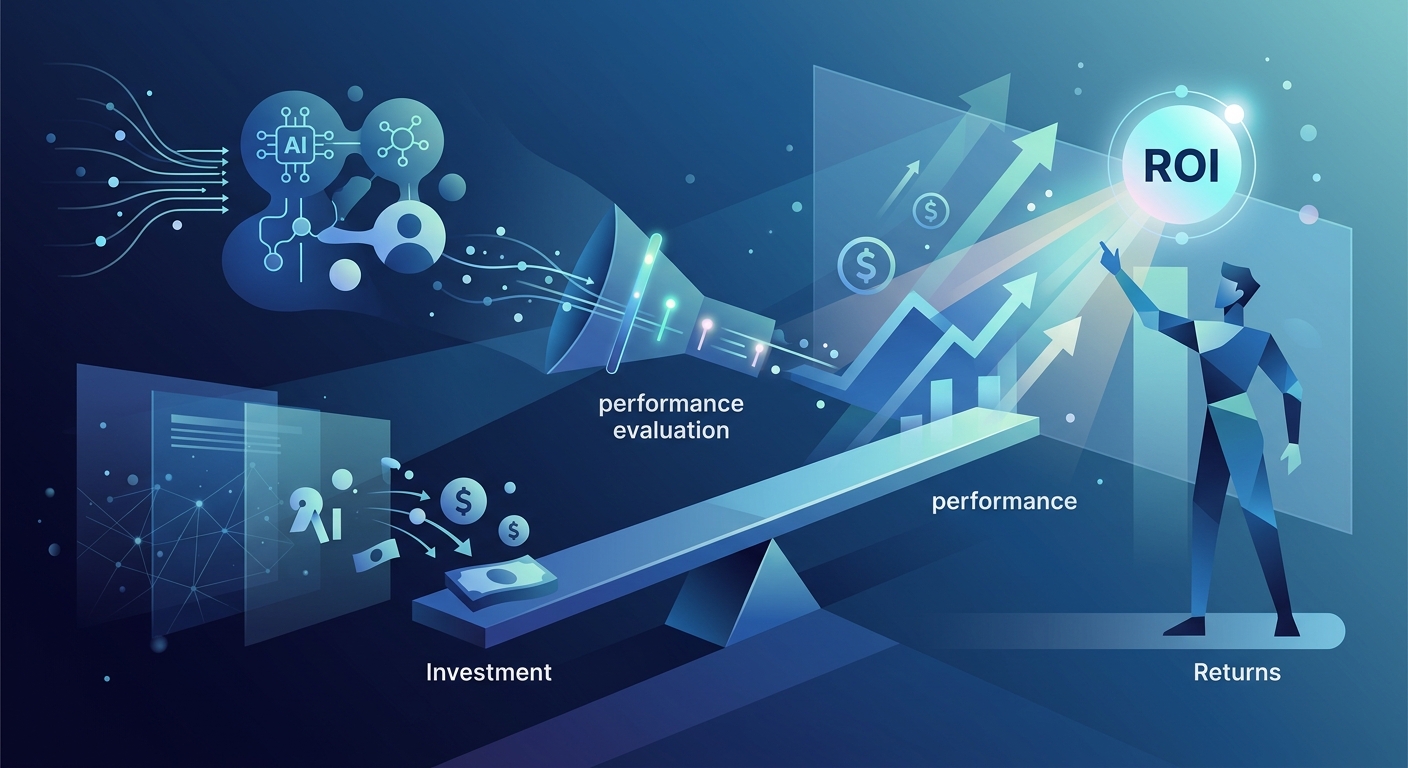
Traditional helpdesk operations are trapped in a cycle of escalating overhead and stagnant service quality. Organizations continue to fund seat-based licenses and consumption-based pricing while support costs rise and customer satisfaction plateaus. Technology procurement must follow measurable outcomes, not precede them. Modern enterprises require an accountable, elastic workforce that scales instantly, replaces fixed labor overhead, and operates strictly on verified results. This guide details how to shift from speculative SaaS metrics to auditable, outcome-driven KPIs, positioning AI helpdesk automation as a strategic engine for risk mitigation and predictable scalability.
Why Traditional AI ROI Models Fall Short for Helpdesk Operations
Legacy procurement models treat AI as static enterprise software, creating structural misalignments that obscure operational value. Seat-based licensing and token-consumption billing reward usage, not resolution. Vendors profit from higher compute costs regardless of whether customer issues are solved. This financial opacity worsens when teams track vanity metrics—system uptime, login rates, or raw platform adoption—instead of business impact. Tracking seats rather than resolved tickets subsidizes inefficiency.
Generic ROI frameworks fail in customer support because they ignore the metrics that directly impact the bottom line: resolution velocity, true cost per interaction, and strict quality thresholds Medium. Forward-thinking organizations are shifting from technology procurement to outcome preservation. Instead of budgeting for speculative capacity, executives demand measurable labor displacement and guaranteed service continuity. This requires abandoning consumption billing in favor of pay-for-performance AI pricing, where every dollar correlates directly to a verified business result.
Defining the Core KPIs for Outcome-Based AI Pricing
Pay-for-performance pricing requires success to be defined by auditable, contractually enforceable KPIs. The process starts by establishing rigorous pre-deployment baselines for first-contact resolution (FCR), ticket deflection rate, and average handle time (AHT). Without these historical benchmarks, isolating automation’s incremental value—and justifying a shift from legacy staffing—is impossible.
Efficiency metrics alone, however, are insufficient. Leadership must tie AI performance directly to customer retention, strict SLA compliance windows, and CSAT thresholds that protect brand equity. When AI agents autonomously resolve Tier-1 inquiries while preserving human capacity for complex, high-value issues, organizations capture both operational savings and revenue protection. Structuring these metrics demands radical transparency. Every interaction must be logged, attributed, and validated against predefined success criteria before it becomes a billable event. This shifts support from a reactive cost center to a predictable, outcome-driven function. By anchoring contracts to verified resolution quality rather than speculative usage, organizations eliminate deployment guesswork and align vendor incentives with enterprise objectives.
The Pay-for-Performance AI Pricing Framework Explained
Traditional vendor contracts place deployment, optimization, and financial risk squarely on the enterprise. Pay-for-performance reverses this dynamic. Providers assume execution risk, and billing triggers exclusively for verified resolutions, prevented escalations, or maintained SLA adherence. This structure converts AI from a fixed capital expenditure into a variable, results-driven operating cost.
To prevent billing disputes and build executive confidence, modern deployments use real-time attribution dashboards that log every agent action. Leadership can verify resolution counts, track CSAT impact, and audit SLA compliance with granular precision. This transparency guarantees organizations never pay for idle capacity, failed prompts, or misrouted tickets. Shifting 67% of conversational volume to AI at sub-dollar resolution costs routinely generates over $2 million in annual savings for mid-market and enterprise teams compared to human-only models fin.ai. By decoupling cost from consumption and tying it strictly to outcomes, companies deploy a scalable support infrastructure that expands only when it delivers measurable value.
Calculating True ROI: Labor Overhead vs. AI Agent Output
Accurate ROI requires calculating the fully loaded cost of human support, not just base salaries. Recruitment, onboarding, training, management overhead, benefits, and attrition typically inflate a $50,000 base salary to $75,000–$85,000 annually per agent StackAI. To measure automation’s impact, executives must benchmark these fully loaded costs against verified AI output. The calculation shifts from speculative forecasting to precise accounting:
AI ROI = (Fully Loaded Labor Savings + Risk Reduction + Revenue Preservation) ÷ Verified AI Spend Symphonize
This formula exposes the gap between rigid fixed overhead and variable, outcome-driven expenditure. Crucially, it quantifies elastic scalability. Traditional teams require months to scale for seasonal demand, leading to overstaffing during lulls and service degradation during peaks. AI workforces scale instantly, managing 10,000 or 50,000 concurrent conversations without proportional budget increases. Under a pay-for-performance model, enterprises pay strictly for resolved volume, converting unpredictable labor forecasting into a predictable, per-outcome expense.
Implementing and Scaling Your Performance-Based AI Strategy
Deploying a results-driven AI infrastructure requires disciplined execution, not rushed technology rollouts. A proven implementation strategy begins with a controlled pilot to calibrate agent capabilities, validate baseline metrics, and establish contractual KPIs against documented workflows. Once performance thresholds align with historical data, enterprises can scale deployment, migrating ticket categories sequentially by complexity and customer impact. This phased approach minimizes disruption while building executive confidence.
Continuous optimization relies on closed-loop feedback: resolved interactions refine the underlying models, while automated workflows update knowledge bases and routing rules in real time. The result is a self-improving ecosystem that compounds ROI with every interaction. For executive leaders, the immediate next step is to audit legacy support spend, isolate hidden overhead, and map it to existing SLA gaps. Quantifying the true cost of attrition and seasonal inefficiency creates a clear business case for transitioning to an accountable AI workforce. meo delivers performance-based AI services that replace speculative SaaS spend with verified outcomes, transforming support from a reactive cost center into a predictable, scalable business function.