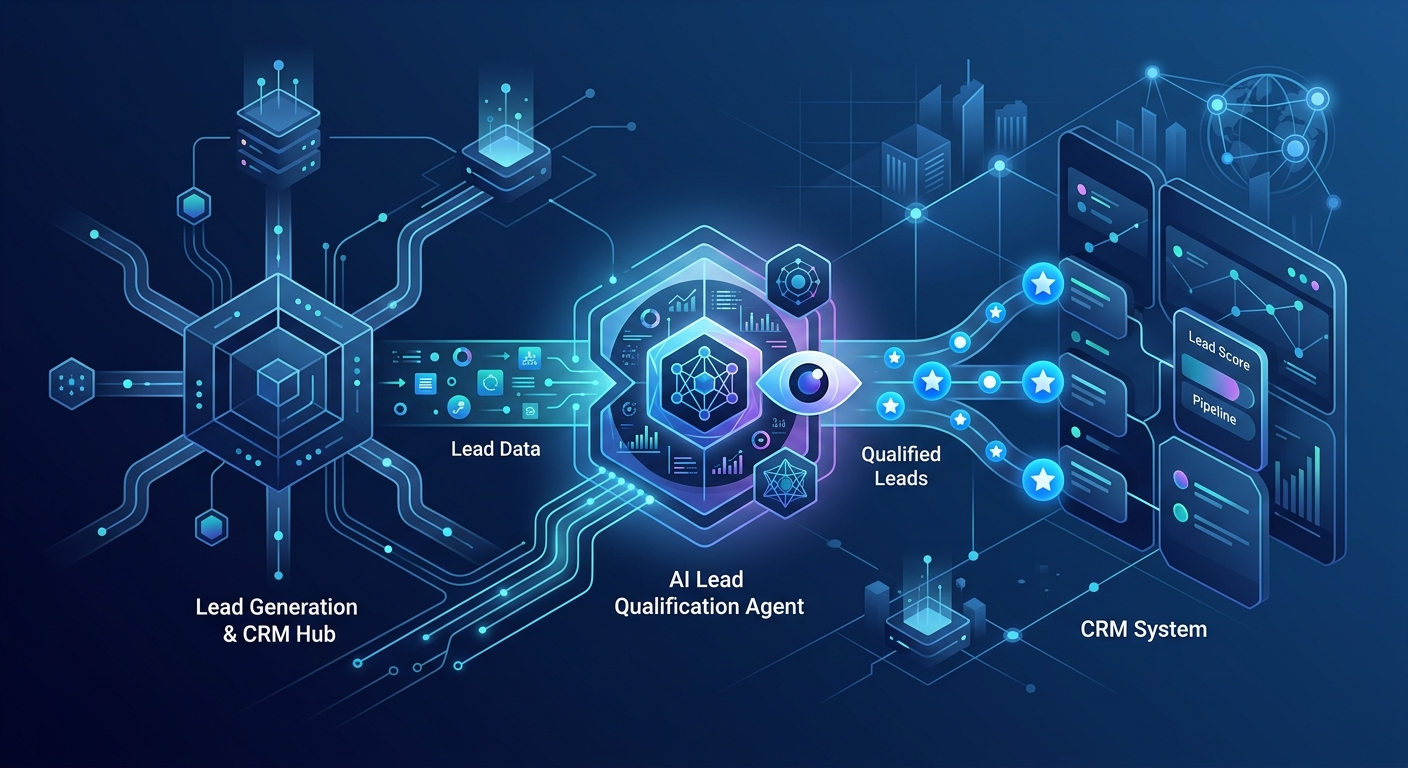
Enterprise revenue teams are constrained not by headcount, but by processing capacity. Traditional sales development models rely on human bandwidth to triage inbound interest, creating predictable bottlenecks that cap growth and inflate customer acquisition costs (CAC). Meo reframes this dynamic entirely. Rather than licensing another feature-heavy CRM module, forward-thinking organizations deploy an accountable, pay-for-performance AI workforce. This strategic shift transforms CRM integration from a passive software layer into an active, autonomous sales development engine—replacing unpredictable labor overhead with measurable, auditable pipeline velocity.
The Hidden Cost of Manual Lead Qualification
Manual lead qualification compounds into a structural liability for scaling enterprises. With SDR turnover consistently hovering near 45%, leadership perpetually reinvests in recruiting, onboarding, and ramp cycles. This churn degrades follow-up consistency and introduces subjective scoring frameworks that distort pipeline forecasting. When qualification criteria shift based on individual rep intuition rather than institutionalized logic, marketing-to-sales handoffs fracture, and genuine buying intent slips through the cracks.
Legacy CRM enhancements compound this inefficiency by layering automation onto fundamentally flawed workflows. While legacy platforms promise activity tracking, they lack operational accountability. As inbound volume grows, labor overhead scales linearly, forcing executives to absorb compounding salary, benefits, and management costs simply to maintain baseline coverage. Modern revenue leaders require predictable conversion metrics and fixed unit economics—not vanity dashboards tracking email sends or call attempts. By shifting to an outcome-driven architecture, enterprises eliminate the hidden drag of manual triage and establish a direct correlation between qualification spend and revenue realization.
How AI Lead Qualification Agents Integrate with Enterprise CRMs
Meo’s AI lead qualification agents deploy natively via secure APIs into Salesforce, HubSpot, and Microsoft Dynamics. This integration requires zero disruption to established workflows or historical data architectures. Unlike bolt-on plugins that create data silos, our architecture operates as a synchronized intelligence layer within your existing CRM ecosystem. These agents accelerate pipeline velocity, enforce data accuracy, and centralize operational control by automating first-touch engagement, structured data capture, and routing decisions (Nurix AI).
Once deployed, the system captures real-time intent signals across email, voice, web chat, and form submissions. It applies dynamic scoring algorithms calibrated to your exact Ideal Customer Profile (ICP), firmographic thresholds, and behavioral intent markers. Rather than flooding representative queues with unvetted MQLs, the engine executes intelligent routing protocols that push only sales-ready, context-rich records directly to human sellers. Advanced conversational AI initiates calls, qualifies leads, and routes high-intent prospects in real time, ensuring top-of-funnel workflows operate continuously without manual intervention (CloudTalk). The result is a frictionless handoff where reps engage only prospects primed for commercial dialogue.
The Meo Difference: Accountable, Pay-for-Performance AI
The legacy SaaS model ties enterprise budgets to seat licenses, feature tiers, and implementation retainers—cost structures that reward activity, not outcomes. Meo replaces this paradigm with a strict pay-for-performance framework. Organizations invest exclusively in verified SQL conversions, eliminating exposure to fixed headcount costs and speculative software overhead. Because AI sales agents automate 80–90% of traditional SDR tasks, prospecting, outreach, and qualification run continuously. Your budget scales only with proven revenue contribution (Planetary Labour).
Performance is measured exclusively on SQL conversion rates, meeting show rates, and downstream revenue attribution—never on connection rates or vanity metrics. Every deployment includes transparent, audit-ready dashboards that contractually align AI output with revenue targets. If the system does not generate qualified opportunities that advance your sales cycle, you do not pay. This model transforms AI from a speculative IT purchase into a predictable, balance-sheet-friendly growth lever. Executives gain complete visibility into unit economics, enabling precise forecasting and capital allocation tied directly to pipeline velocity.
Enterprise Security, Governance & Human Oversight
Deploying autonomous systems at scale requires uncompromising security and deterministic governance. Meo works under your security and privacy requirements, including GDPR and CCPA obligations, and can complete your vendor security review. All data in transit and at rest utilizes AES-256 encryption, with zero-retention defaults and strict role-based access controls ensuring sensitive prospect information never persists beyond active qualification windows.
Beyond infrastructure, we enforce conversational governance through deterministic prompt engineering and immutable audit logs. Every interaction maintains brand consistency, regulatory alignment, and legal defensibility. Unlike generative black-box models prone to hallucination or script drift, our agents operate within tightly constrained decision trees that guarantee compliant outreach at scale. For enterprise accounts, complex negotiations, or regulated verticals, we deploy configurable human-in-the-loop escalation protocols. When an agent detects high-value signals, compliance triggers, or edge-case objections, it seamlessly routes the conversation to a senior sales leader or compliance specialist. This hybrid architecture ensures autonomous execution never compromises enterprise risk thresholds.
Implementation Roadmap & Measurable Revenue Outcomes
Meo’s deployment methodology prioritizes rapid validation and continuous optimization. Every engagement begins with a 14-day parallel-run pilot, operating alongside your existing SDR team to validate CRM data synchronization, scoring logic, and qualification thresholds. During this phase, we benchmark baseline conversion metrics, calibrate ICP parameters, and stress-test routing rules without disrupting live pipeline operations.
Following production cutover, the system enters automated optimization cycles. By ingesting closed-won data, win/loss analysis, and representative feedback, the agents continuously refine targeting parameters, messaging cadences, and objection-handling frameworks. The resulting performance trajectory delivers measurable CAC reduction through eliminated labor waste, accelerated sales cycles via instant intent capture, and scalable pipeline generation without incremental overhead (Latest Techs News). Organizations transition from reactive hiring cycles to a governed, outcome-driven revenue engine.
Conclusion
The future of enterprise sales development does not require hiring more representatives or licensing additional software. It requires deploying an accountable AI workforce that converts inbound interest into qualified pipeline with mathematical precision. Meo’s pay-for-performance model ensures capital is deployed only when measurable outcomes materialize, directly aligning technology investment with revenue realization.
Ready to replace labor overhead with predictable pipeline velocity? Schedule a 30-minute architecture review to evaluate your CRM environment, define qualification thresholds, and launch a parallel-run pilot within 14 days.