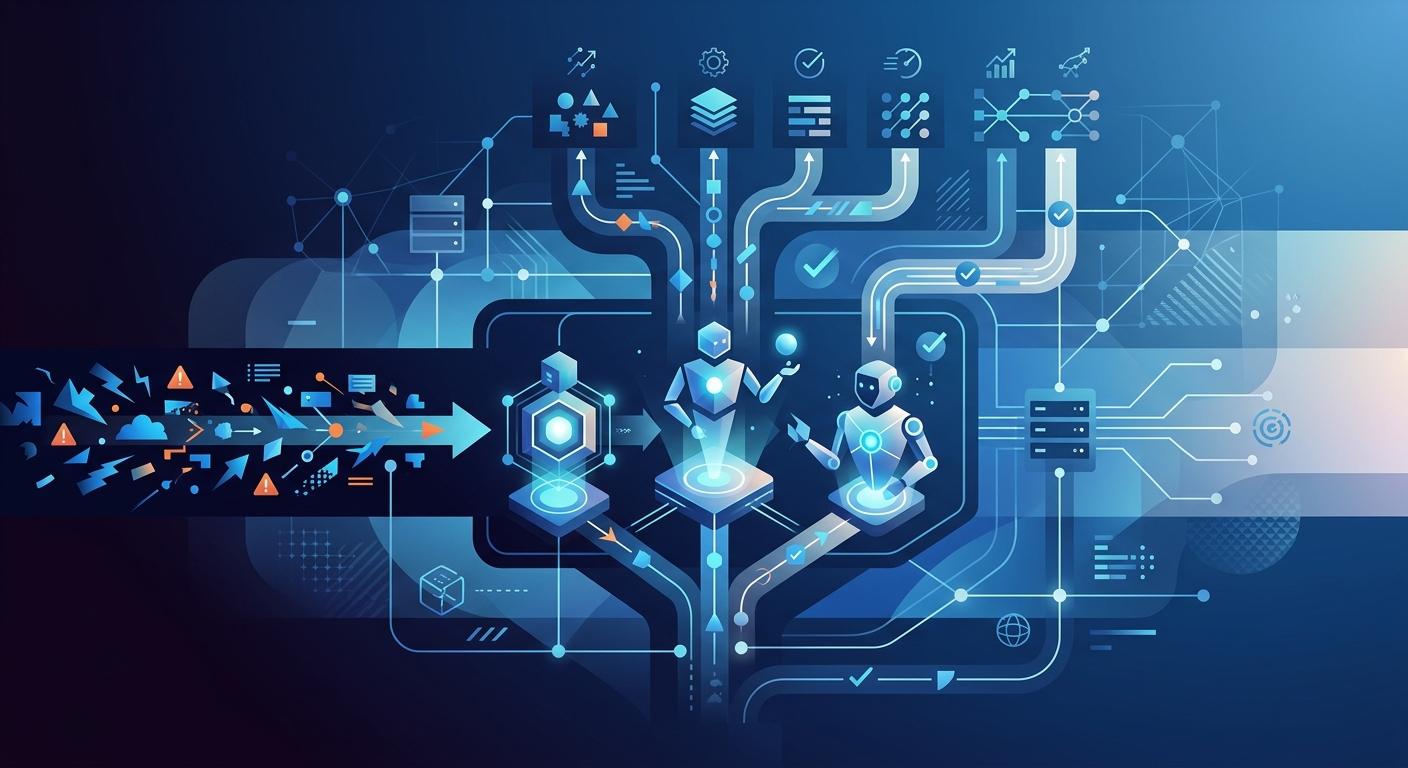
Modern enterprise IT environments face a severe signal-to-noise imbalance that directly erodes engineering productivity and inflates operational costs. Manual ticket routing, repetitive diagnostics, and chronic alert fatigue consume thousands of high-value labor hours annually. This overhead creates a measurable drag on organizational velocity and profitability. Prior to automated deployment, executive leadership must establish rigorous baselines for Mean Time to Resolution (MTTR), SLA compliance rates, and fully loaded resolution costs per incident. These metrics establish the financial and operational baseline against which autonomous impact is measured. By deploying AI incident response agents, organizations convert reactive incident management into a predictable, outcome-driven function. The mandate is straightforward: eliminate manual triage overhead, enforce strict performance accountability, and redirect senior engineering talent toward strategic, revenue-generating initiatives.
The Executive Case for Autonomous Triage
Traditional IT operations models are unsustainable. The labor overhead of manual routing and alert fatigue typically consumes 20–30% of total engineering capacity, diverting senior architects and site reliability engineers from strategic initiatives. When every alert requires human validation, mean time to acknowledge (MTTA) increases significantly, and SLA compliance degrades under operational strain. To justify autonomous deployment, organizations must first quantify this baseline labor cost. This requires tracking fully loaded hourly rates for tier-1 and tier-2 support staff, measuring average resolution times across severity levels, and calculating the direct financial impact of SLA breaches. These baselines define the exact operational and financial gap autonomous systems must close. Rather than scaling headcount to manage expanding infrastructure, executive teams are adopting performance-driven architectures that target measurable reductions in MTTR and resolution costs. The objective is not incremental efficiency; it is the systematic elimination of manual overhead through accountable, outcome-based operations.
Agent Architecture & ITSM Integration
Enterprise deployment requires seamless integration with existing monitoring, logging, and service desk ecosystems. AI IT operations agents must map directly to established telemetry pipelines and ITSM platforms without disrupting current workflows or creating shadow IT. The architecture utilizes secure, standardized API connectors to ingest logs, metrics, and distributed traces from platforms such as Datadog, Splunk, Prometheus, and New Relic. Simultaneously, the agent interfaces directly with service management tools like ServiceNow, Jira, or Freshservice to create, update, and resolve tickets programmatically.
Crucially, enterprise autonomy requires strict operational boundaries. Deterministic escalation protocols and clearly defined human-in-the-loop guardrails prevent uncontrolled execution. Low-to-medium complexity incidents—such as disk space exhaustion, service restart failures, or known application errors—are resolved end-to-end using approved runbooks. High-risk, multi-system, or business-critical anomalies trigger immediate, context-rich alerts routed to human operators with comprehensive diagnostic summaries. Unlike legacy monitoring tools that generate alert noise, modern autonomous agents detect anomalies, isolate root causes across distributed systems, execute remediation, and resolve tickets independently. By embedding contextual decision-making into the DevOps lifecycle, these systems operate with the precision of senior engineers, accounting for system dependencies, business impact thresholds, and operational risk. This structured integration ensures continuity while systematically reducing manual intervention.
Phased Enterprise Deployment Blueprint
Enterprise adoption requires a disciplined, risk-controlled rollout. The deployment framework begins with establishing secure data pipelines, granular API permissions, and strict principle-of-least-privilege (PoLP) access controls. Agents never operate with blanket administrative rights. Instead, they are provisioned with scoped, ephemeral credentials aligned with pre-approved operational playbooks. Secrets management routes through enterprise vaults (e.g., HashiCorp Vault, AWS Secrets Manager) with automatic rotation and strict audit trails.
Validation begins in a read-only sandbox. During this phase, AI workflows are stress-tested against historical incident datasets, synthetic failure simulations, and shadow-mode ticket generation. Diagnostic accuracy, routing logic, proposed remediation steps, and false-positive rates undergo rigorous auditing before production execution permissions are granted. Once sandbox metrics exceed predefined confidence thresholds (typically >95% diagnostic accuracy and <2% false escalation rate), the system transitions to Phase Two: automated triage with supervised execution.
This progression is governed by strict change management gates. Each escalation in autonomy requires documented approval from IT security, platform engineering, and compliance stakeholders. Our Implementation Methodology enforces iterative validation cycles, ensuring agents adapt to enterprise-specific network topologies and application architectures before handling live production incidents. While 79% of enterprises are actively deploying AI agents, successful implementations share a defining characteristic: rigorous, phased deployment over uncontrolled rollout. By prioritizing controlled integration, continuous validation, and zero-trust architecture principles, organizations eliminate deployment risk while accelerating time-to-value.
Measuring Outcomes: The Pay-for-Performance Model
Traditional software licensing shifts financial risk entirely to the buyer. Autonomous workforce deployment requires a fundamentally different approach. Meo enforces a Pay-for-Performance Model that aligns vendor compensation with verified operational KPIs. Capital investment is directly tied to delivered results—specifically, measurable reductions in tier-1 ticket volume, MTTR, and SLA breach rates—rather than abstract seat licenses, API call volumes, or speculative compute metrics.
Organizations must track three core metrics to validate efficacy: first-line ticket deflection rates, MTTA, and sustained infrastructure uptime. Deflection rates quantify the percentage of incidents resolved without human escalation. MTTA measures the velocity of alert triage, contextualization, and routing to the optimal resolution path. Infrastructure uptime reflects the downstream impact of accelerated incident handling on business continuity and customer experience.
Vendor contracts tie outcome fees to these outcomes. Performance tiers dictate compensation, ensuring investment scales directly with operational improvements. If agents fail to meet agreed-upon thresholds, financial exposure is strictly capped. This accountability framework transforms IT operations from an unpredictable cost center into a measurable, optimized function. By tying procurement directly to verified results, enterprises eliminate speculative spending and ensure every deployed agent delivers a defensible return on investment.
Governance, Security & Compliance Guardrails
Autonomy without accountability is an enterprise liability. Every diagnostic action, routing decision, and remediation step must be recorded in immutable audit logs, complete with decision trees, contextual telemetry, and outcome verification. These logs provide complete traceability for internal security reviews, regulatory audits, and post-incident analysis. Meo’s Security, Compliance & Governance framework maps AI-driven workflows to the controls your SOC 2, ISO 27001, or ITIL v4 programs require from deployment. By embedding compliance controls, role-based access restrictions, and automated policy validation directly into the architecture, organizations maintain strict regulatory posture while accelerating operational velocity. Every action requires cryptographic verification, and every escalation path receives pre-approval from security leadership.
Scaling the Autonomous Workforce
Once baseline triage is optimized and performance thresholds are consistently met, the autonomous workforce scales into advanced operational domains. Autonomous DevOps agents evolve from reactive handlers to proactive systems managers, executing capacity forecasting, patch orchestration, and self-healing infrastructure protocols. Long-term success depends on establishing internal playbooks for continuous agent retraining, cross-functional engineering handoffs, and enterprise-wide adoption. This iterative expansion transforms static IT operations into a dynamic, self-optimizing ecosystem that anticipates failures before they impact users.
The era of reactive IT operations is concluding. Deploying autonomous incident triage agents is no longer an experimental pilot—it is an executive imperative for organizations demanding predictable, scalable outcomes. Partner with Meo to replace unpredictable labor overhead with a performance-driven AI workforce. Schedule a baseline assessment to quantify current operational overhead and map a phased deployment roadmap tailored to your infrastructure.