The Evolution of Omnichannel Support in Modern Enterprise
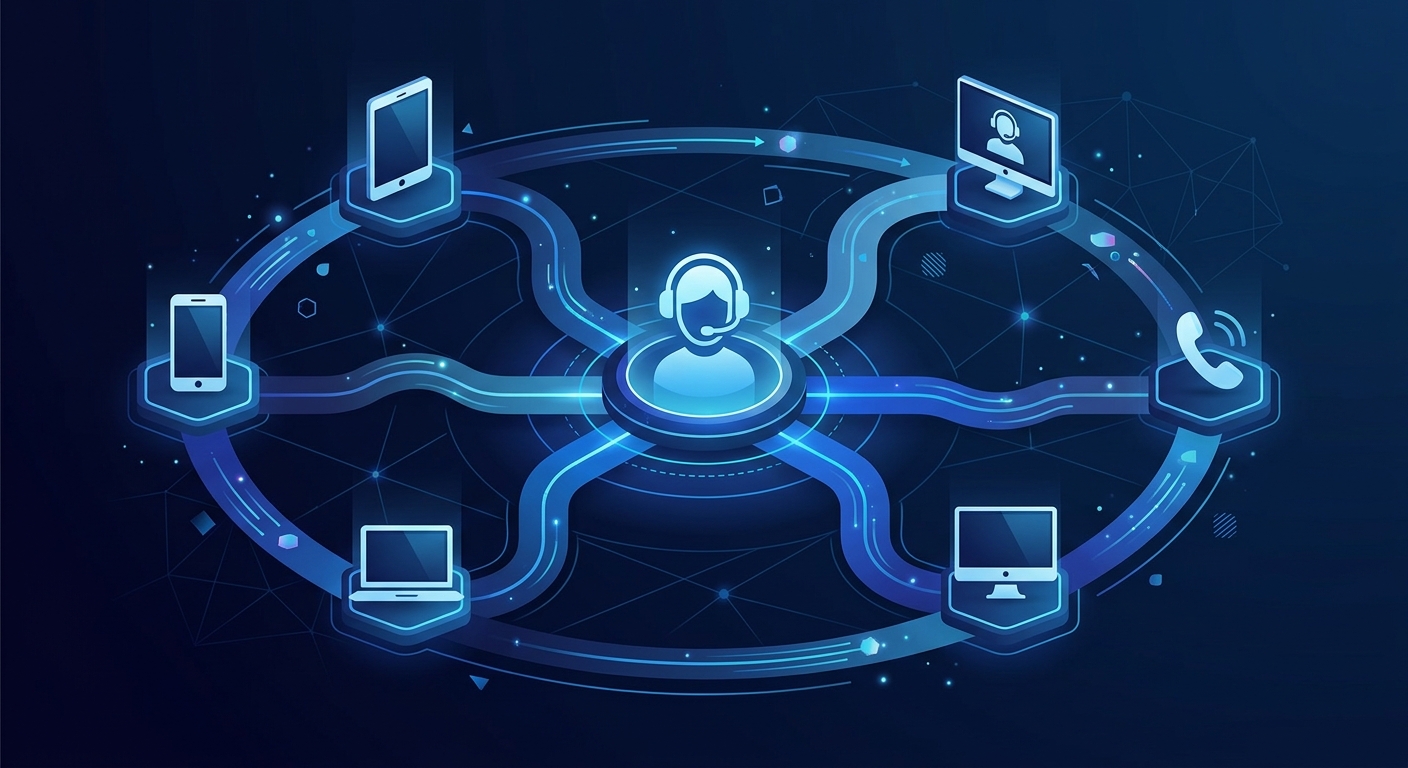
Omnichannel support is a customer service strategy that provides customers with a seamless, integrated experience across all communication channels, ensuring that context and data follow the user throughout their journey. While many organizations claim to offer omnichannel capabilities, most are actually operating in a multichannel environment. In a multichannel model, a company may offer email, phone, and chat support, but these channels exist in silos. Omnichannel support removes these boundaries, allowing a customer to start a conversation on social media and conclude it via a phone call without having to repeat their issue.
Today, omnichannel support has evolved from a competitive advantage to a baseline consumer expectation. According to the National Institute of Standards and Technology (NIST), 9 out of 10 consumers now expect a seamless experience between communication methods. For the enterprise, this shift is critical because it directly impacts Customer Lifetime Value (CLV). When customers encounter friction—such as having to re-explain a complex technical problem to three different agents—satisfaction drops and churn risk increases.
Key Insight: Companies with strong omnichannel engagement retain an average of 89% of their customers, compared to just 33% for companies with weak omnichannel strategies, according to Gartner (2023).
Core Components of a Unified Support Infrastructure
To move beyond the limitations of siloed communication, enterprises must build a unified support infrastructure. The technical foundation of this infrastructure is the Single View of the Customer (SVOC). SVOC is a centralized data profile that aggregates every interaction, purchase, and support ticket associated with an individual customer into one accessible record. Without SVOC, omnichannel support is impossible because agents lack the real-time context necessary to provide personalized service.
Data integration is the primary hurdle in achieving this unified view. Modern support stacks often involve a mix of legacy on-premise systems and modern SaaS tools. For a truly integrated experience, your Customer Relationship Management (CRM) system must serve as the "source of truth." When a customer interacts with a chatbot, that interaction should be logged in the CRM immediately. If the customer later calls a live agent, that agent should see the chat transcript and the specific resolution steps already attempted. This level of synchronization reduces Average Handle Time (AHT) and increases First Contact Resolution (FCR) rates.
Cross-channel context preservation also requires a robust Enterprise Service Bus (ESB) or a sophisticated API layer. These technologies ensure that data flows in both directions between the front-end communication tools (like Zendesk or Salesforce Service Cloud) and the back-end operational systems (like ERPs or inventory management). This is particularly important for AI agents for invoice exception handling, where financial data must be accurately reflected across support channels to resolve billing disputes efficiently.
Strategic Implementation: Overcoming Silos and Technical Debt
Transitioning to a mature omnichannel model requires more than buying new software; it requires a cultural and structural shift within the organization. Most enterprises are organized by department—marketing, sales, and support—each with its own budget and technology stack. This departmentalization is the root cause of the data silo problem. To overcome it, decision-makers must align these departments under a unified Customer Experience (CX) mandate.
- Audit Existing Touchpoints: Map the current customer journey to identify where data is lost. For example, does information from a social media DM make it into the support ticket system?
- Consolidate the Tech Stack: Reduce the number of disparate tools. If you use five different platforms for email, SMS, chat, voice, and social, consider migrating to a unified platform that handles all five natively.
- Address Technical Debt: Legacy systems that do not support modern APIs should be phased out or wrapped in integration layers. Technical debt is often the silent killer of omnichannel initiatives, as it prevents real-time data synchronization.
- Implement AI Orchestration: As enterprises scale, human agents cannot manually track every cross-channel interaction. Using enterprise AI agent orchestration allows for automated context passing and intelligent routing based on the customer's history across all platforms.
Measuring the ROI of Omnichannel Support Systems
Quantifying the success of an omnichannel strategy requires looking beyond traditional support metrics. While CSAT (Customer Satisfaction) and NPS (Net Promoter Score) remain vital, they do not tell the whole story. To measure true ROI, organizations must examine operational efficiency and revenue retention. For a deeper look at these metrics, see our guide on measuring AI agent ROI for enterprise customer support automation.
Key metrics for omnichannel success include:
- Cross-Channel Resolution Rate: What percentage of issues are resolved without the customer switching channels? Conversely, when they do switch, how often is the issue resolved at the second touchpoint?
- Reduced Cost per Contact: Integrated systems allow for better use of self-service and AI, which lowers the overall cost per interaction.
- Customer Retention Rate: As noted by Gartner, the correlation between omnichannel maturity and retention is strong. A 10% increase in retention can lead to a 25% to 95% increase in profits.
The Role of Asynchronous vs. Synchronous Channels
A common mistake in omnichannel strategy is treating all channels the same. Effective support requires a balance of synchronous (real-time) and asynchronous (delayed) interactions. Synchronous channels like live chat and phone are essential for urgent, complex issues. Asynchronous channels like email, WhatsApp, and social media messaging allow customers to communicate at their own pace.
In an omnichannel environment, the transition between these must be seamless. A customer might send a WhatsApp message (asynchronous) and, if the issue becomes too complex, the system should offer a click-to-call option (synchronous) that connects them to an agent who already has the WhatsApp transcript on their screen. This flexibility respects the customer's time and reduces the cognitive load on both the user and the support representative.
Accessibility and Consistency: The New Regulatory Standard
Governmental bodies are increasingly viewing digital customer experience as a matter of accessibility and consumer rights. According to NIST, accessibility and consistency across digital platforms are no longer optional. This is particularly relevant for highly regulated industries like finance and healthcare.
Ensuring that your omnichannel support is accessible means that a visually impaired customer should receive the same quality of service and information through a screen reader on your website as they would over the phone. Consistency in information is equally critical. If a chatbot provides one answer regarding a refund policy and a phone agent provides another, the resulting information gap can lead to regulatory scrutiny and loss of consumer trust. For organizations managing these complexities, autonomous regulatory change monitoring AI can help ensure that all support channels are updated simultaneously when policies change.
Future-Proofing with Customer Data Platforms (CDP)
Looking toward the future of the Agentic Enterprise, the Customer Data Platform (CDP) is replacing the traditional CRM as the heart of omnichannel support. While a CRM focuses on sales pipelines and basic contact information, a CDP is designed to ingest large amounts of behavioral data in real time. This enables predictive support—anticipating a customer's needs before they even reach out.
For example, if a CDP detects that a user has failed to log in to their account three times on the mobile app, it can trigger an automated, personalized SMS offering help. This proactive approach turns support from a reactive cost center into a proactive value driver. Implementing such advanced systems requires strict adherence to AI agent data privacy compliance to ensure that customer data is handled ethically and securely.
Key Takeaways
- Omnichannel is about context, not just channels. The defining characteristic is the seamless flow of data between touchpoints.
- Integration is the primary barrier. Success depends on a Single View of the Customer (SVOC) powered by a unified CRM or CDP.
- Retention is the primary ROI. Companies with strong omnichannel strategies see retention rates of up to 89%.
- AI is the scaling mechanism. As cross-channel complexity grows, AI agent orchestration becomes necessary to maintain context and speed.
Frequently Asked Questions
What is the difference between multichannel and omnichannel support?
Multichannel support offers several ways for customers to get in touch (email, phone, chat), but these channels are disconnected. Omnichannel support integrates these channels so that the customer's history and context follow them from one channel to the next seamlessly.
Why is a Single View of the Customer (SVOC) important?
SVOC is the technical foundation of omnichannel support. It ensures that regardless of which channel a customer uses, the support agent (or AI) has access to their full history, preferences, and previous interactions, preventing the customer from having to repeat information.
How does omnichannel support improve customer retention?
By reducing friction and providing a more personalized, efficient experience, omnichannel support builds trust and satisfaction. Research from Gartner indicates that companies with strong omnichannel engagement retain 89% of their customers on average.
Can AI help in delivering omnichannel support?
Yes, AI is critical for scaling omnichannel efforts. AI agents can handle routine inquiries across multiple channels simultaneously while maintaining context, and orchestration platforms can ensure that data is correctly routed between human agents and automated systems.
What are the challenges of implementing an omnichannel strategy?
The biggest challenges are breaking down departmental silos, integrating legacy technology systems, and managing the large amounts of data required to maintain a real-time view of the customer journey.
Is omnichannel support only for large enterprises?
While large enterprises often have more complex needs, businesses of all sizes can benefit from an omnichannel approach. Modern SaaS support platforms have made it easier for smaller companies to integrate their communication channels without large upfront infrastructure costs.