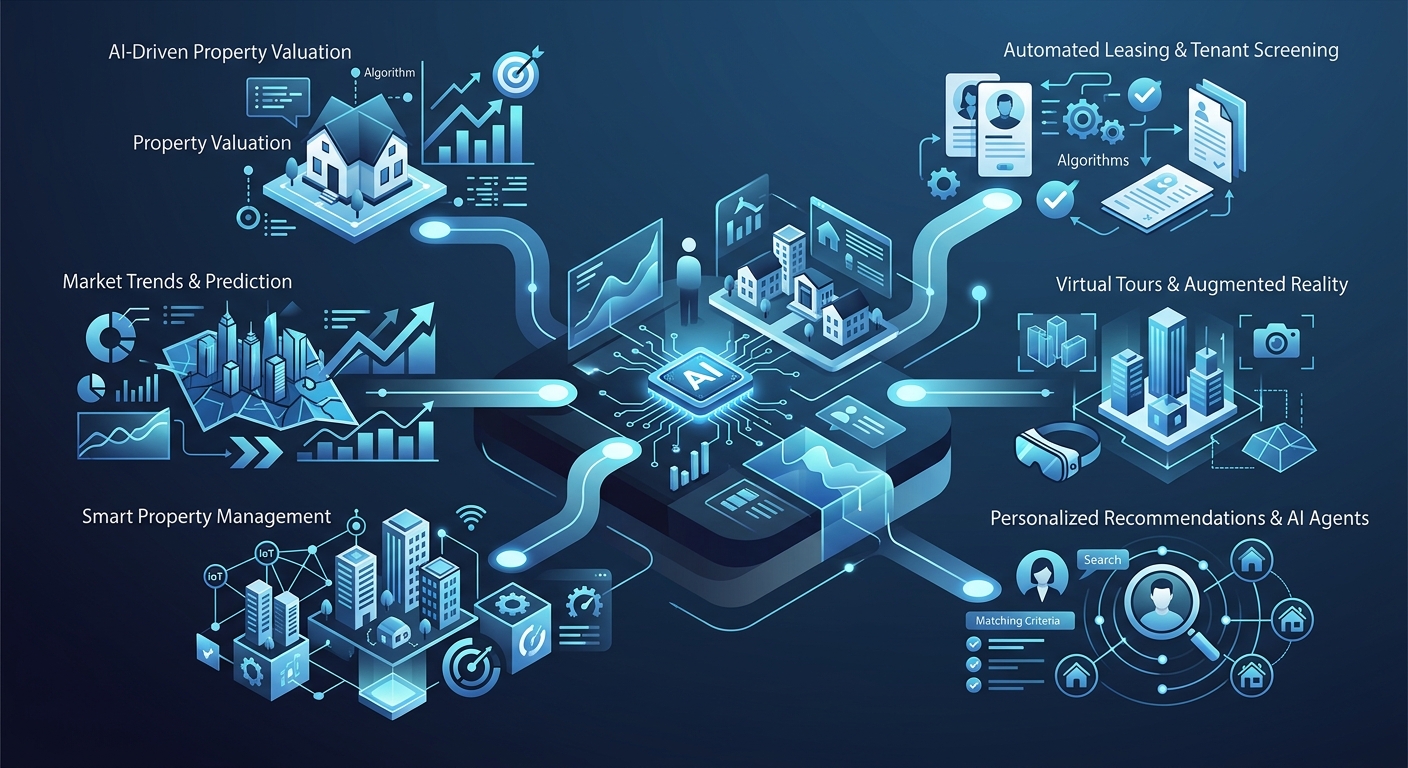
The real estate industry is undergoing a structural shift as artificial intelligence (AI) moves from experimental pilot programs to core operational integration. While the sector has historically relied on manual appraisals and localized market knowledge, the introduction of machine learning (ML) and generative AI is enabling firms to process vast datasets with unprecedented speed. AI in real estate refers to the application of machine learning algorithms, natural language processing, and computer vision to automate property valuation, enhance lead generation, and optimize facility management.
According to research from PwC, firms with operationally intensive property holdings, such as residential and healthcare-related assets, are increasingly using AI to improve customer service and maintenance efficiency. This transition is not merely about replacing human labor; it is about augmenting the capabilities of real estate brokers and asset managers to make data-driven decisions that were previously impossible.
Key Takeaways
- Operational Gains: AI-driven property management can reduce operational costs by up to 15% in residential and healthcare sectors.
- Market Adoption: Approximately 75% of real estate professionals report using AI for at least one task, primarily in marketing and lead nurturing.
- Predictive Power: Machine learning models now forecast property price fluctuations and investment risks with higher accuracy than traditional linear models.
- Asset Optimization: Operationally intensive sectors use AI for predictive maintenance to extend the lifecycle of building systems.
The Role of Artificial Intelligence in Real Estate
Artificial intelligence serves as the analytical backbone for modern property technology (PropTech). In its most basic form, AI acts as a pattern recognition engine. By ingesting decades of historical transaction data, zoning laws, and demographic shifts, AI identifies correlations that human analysts might overlook.
"While saturation on the scale where AI tools replace workers is rare in the real estate industry, it is occurring. Real estate use cases include data analytics, leasing and investment recommendations, and price modeling." — PwC Emerging Trends in Real Estate
The role of AI is fundamentally one of risk mitigation and value creation. For developers, AI can simulate the impact of new construction on local infrastructure. For investors, it provides a "buy/sell/hold" recommendation engine based on real-time market volatility. By shifting the industry from reactive to proactive, AI allows firms to capture alpha in increasingly competitive markets.
How AI Is Used in Real Estate Operations
AI is used in real estate to streamline the entire lifecycle of a property, from initial site selection to long-term tenant retention. One of the most significant applications is in the automation of administrative tasks. For example, AI agents for invoice exception handling are replacing traditional rule-based workflows in property accounting departments.
In the residential sector, AI is used to manage high-volume tenant inquiries. AI-powered chatbots can qualify leads, schedule viewings, and even process rental applications 24/7. This ensures that real estate sales agents focus their time on high-value closings rather than repetitive data entry. Furthermore, AI is increasingly integrated into CRM systems to automate lead nurturing and follow-ups, ensuring no potential buyer or tenant falls through the cracks.
AI-Driven Analytics and Forecasting
Predictive analytics represent the most sought-after AI use case in real estate. These models use historical data to forecast future market conditions. Unlike traditional spreadsheets, AI models can account for non-linear variables such as social media sentiment, local news trends, and even satellite imagery of construction progress.
Key applications in forecasting include:
- Market Trend Analysis: Identifying up-and-coming neighborhoods before they reach peak pricing.
- Valuation Accuracy: Reducing the margin of error in Automated Valuation Models (AVMs) by incorporating hyper-local data points.
- Risk Assessment: Modeling the impact of climate change or economic shifts on specific asset classes.
By applying these insights, enterprise stakeholders can allocate capital more efficiently. For instance, AI for real estate strategy often involves using these forecasts to determine the optimal timing for property divestment.
AI-Powered Property Tours and Marketing
Generative AI is transforming how properties are marketed to potential buyers. Traditionally, virtual staging required expensive photographers and graphic designers. Today, generative AI can take a photo of an empty room and instantly populate it with furniture in various styles, from "mid-century modern" to "industrial."
| Marketing Tool | Traditional Method | AI-Enhanced Method | Impact |
|---|---|---|---|
| Property Descriptions | Manual writing (30-60 mins) | LLM-generated (10 seconds) | Faster time-to-market |
| Virtual Staging | Physical furniture or CG ($500+) | AI Image Generation (<$10) | 90% cost reduction |
| Lead Qualification | Manual phone calls/emails | AI Voice/Chat Agents | 24/7 coverage |
| Social Media | Scheduled posts | Dynamic, trend-responsive | Higher engagement |
Key Insight: Generative AI is transforming marketing by creating property descriptions and virtual staging images automatically, allowing small firms to compete with enterprise-level marketing budgets. PwC
AI-Enhanced Smart Home Technology
In property management, AI-enhanced smart home technology is driving the smart building movement. This involves the integration of Internet of Things (IoT) sensors with AI backends to manage energy consumption and security. AI systems can learn tenant habits to optimize heating, ventilation, and air conditioning (HVAC) systems, significantly reducing utility costs.
For enterprise property owners, this technology is critical for meeting ESG (Environmental, Social, and Governance) goals. AI can analyze energy usage patterns and automatically adjust building settings to minimize the carbon footprint. Additionally, AI-powered surveillance systems can distinguish between routine movement and security threats, providing a safer environment for residents in residential advisor managed facilities.
Understanding ROI: AI Investment Returns in Real Estate
Quantifying the return on investment (ROI) for AI is essential for enterprise adoption. The primary drivers of ROI in real estate are cost reduction and revenue enhancement. According to PwC-ULI 2024, AI-driven property management can reduce operational costs by up to 15%.
ROI is typically realized through:
- Reduced Vacancy Rates: AI predicts which tenants are likely to leave, allowing managers to offer incentives before a lease expires.
- Optimized Pricing: Dynamic pricing models for short-term rentals and multifamily units ensure that rates are always aligned with market demand.
- Lower Maintenance Costs: Identifying equipment failure before it occurs through continuous AI monitoring.
Firms must track AI agent ROI by comparing baseline operational costs against the performance of AI-enabled workflows over a 12-to-24-month period.
AI in Real Estate: Best Practices and Challenges
Implementing AI is not without its hurdles. One of the primary challenges is the "black box" issue in property valuation. When an AI model provides a mortgage lending valuation, lenders and regulators often require a transparent breakdown of the factors influencing that price. To navigate this, firms should prioritize "Explainable AI" (XAI) models that provide reasoning for their outputs.
Another significant challenge is data privacy. When implementing smart home technology, firms must protect tenant Personally Identifiable Information (PII).
Key Insight: To protect data privacy, organizations must implement "data privacy by design," strong encryption practices, and establish a lawful basis for processing personal data, especially in high-risk surveillance applications.
Best practices for adoption include:
- Start Small: Implement AI in one department, such as marketing or accounting, before a full-scale rollout.
- Data Hygiene: Ensure that the data used to train AI models is clean, unbiased, and comprehensive.
- Governance: Establish clear AI agent audit trails to ensure compliance with local housing laws and fair lending practices.
Strategies for Mid-Sized Brokerage Firms
Small-to-mid-sized brokerage firms often feel they lack the enterprise-level budget required for custom AI model training. However, the rise of "fractional" AI services is changing this. Smaller firms can integrate AI by using fractional Chief AI Officer (CAIO) models, which provide enterprise-grade strategy at 20% to 30% of the cost of a full-time hire.
Additionally, many AI tools are now available as SaaS (Software as a Service) platforms, requiring no internal development. By engaging in targeted AI consulting projects, which typically range from $10,000 to $50,000, smaller organizations can identify and embed tailored AI solutions into everyday workflows without the need for a massive capital outlay.
Looking Ahead: The Future of AI in Real Estate
The future of AI in real estate lies in agentic orchestration. We are moving toward a world where autonomous AI agents handle the entire transaction lifecycle—from finding a property and conducting due diligence to securing financing and managing the closing process.
As AI continues to evolve, we expect to see more integration between the physical and digital worlds. Digital twins—3D virtual replicas of physical buildings—will be continuously updated by AI, allowing owners to simulate the impact of renovations or climate events in a virtual environment before taking action in the real world. The firms that adopt these technologies today will be the ones that define the market landscape of tomorrow.
Frequently Asked Questions
How does AI improve property valuation accuracy?
AI improves valuation by analyzing thousands of data points simultaneously, including non-traditional factors like local foot traffic, school district ratings, and recent social media trends, which traditional appraisals might miss.
Can AI replace real estate agents?
While AI automates many tasks, it is unlikely to replace agents entirely. Real estate remains a relationship-driven industry; AI serves to augment agents by handling data-heavy tasks, allowing them to focus on negotiation and client relations.
Is AI in real estate expensive to implement?
Implementation costs vary. While custom enterprise solutions are expensive, many brokerage firms use cost-effective SaaS tools for marketing and lead generation that offer a high ROI with minimal upfront investment.
What are the risks of using AI for mortgage lending?
The primary risks include algorithmic bias and the "black box" problem, where the reasoning behind a valuation is unclear. Firms must use transparent models to ensure compliance with fair lending laws.
How does AI help with building sustainability?
AI optimizes energy consumption by managing HVAC and lighting systems in real-time based on occupancy and weather patterns, helping building owners meet strict ESG and carbon reduction goals.
What is virtual staging in AI real estate marketing?
Virtual staging uses generative AI to add digital furniture and decor to photos of empty properties, making them more appealing to buyers at a fraction of the cost of physical staging.