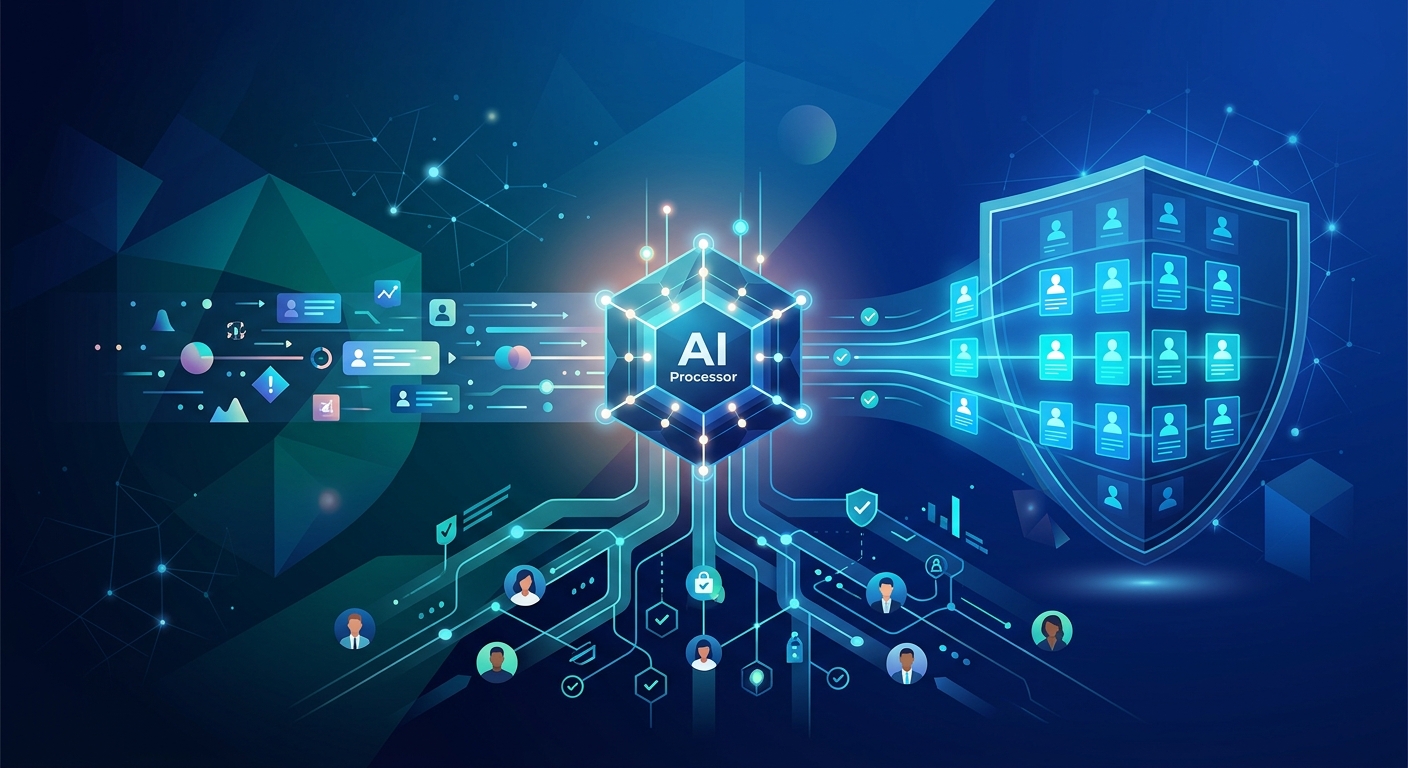
Enterprise staffing firms operate at the intersection of rapid talent deployment and stringent regulatory compliance. As client mandates tighten and regulatory frameworks evolve, traditional labor-heavy vetting models are structurally failing. meo replaces manual compliance overhead with a scalable, outcome-driven AI workforce operating strictly on a pay-for-performance basis. This is not another software add-on or headcount expansion. It is the deployment of autonomous AI agents that guarantee audit-ready placements, transforming compliance from a reactive cost center into a measurable competitive advantage. The market demands precision, transparency, and a commercial model that ties capital directly to verified outcomes.
The Compliance Bottleneck in Enterprise Staffing
Manual credential verification, background checks, and license validations remain the primary constraint on enterprise talent deployment. Every hour spent cross-referencing fragmented federal, state, and institutional databases delays placements, erodes revenue, and compounds liability exposure. Traditional BPO models scale costs linearly with volume without guaranteeing accuracy or operational accountability. Adding temporary compliance staff to manage volume spikes only increases overhead while introducing inconsistent standards and human error.
Fragmented regulatory mandates consistently outpace legacy staffing workflows. OSHA certifications, state licensing boards, EEOC guidelines, and proprietary enterprise vendor requirements create a complex jurisdictional matrix that human teams cannot track efficiently at scale. As regulatory scrutiny intensifies around data privacy and algorithmic decision-making, the legal and financial exposure of point-in-time manual verification has become unsustainable. The 2026 compliance landscape is inherently proactive, demanding continuous monitoring over static checklists. Relying on billable hours creates a structural misalignment: legacy vendors profit from administrative friction, not verified accuracy.
How AI Agents Automate Compliance Vetting
Modern AI agents eliminate manual bottlenecks by executing real-time credential, background, and license validations across thousands of disparate data sources simultaneously. Unlike legacy workflows that treat compliance as a one-time gate, autonomous agents enforce continuous monitoring protocols. They track expiration dates, active sanction lists, disciplinary actions, and credential renewals across the entire contract lifecycle. This proactive architecture ensures placements remain compliant long after onboarding, closing the regulatory gaps that trigger costly client disputes and contract terminations.
Integration is engineered for operational continuity. Through robust API orchestration, agents connect natively with existing Applicant Tracking Systems (ATS), Vendor Management Systems (VMS), and HR Information Systems (HRIS). Candidate data flows bidirectionally: agents ingest profiles, execute multi-jurisdictional verification logic, and auto-populate compliance dashboards in real time. By standardizing validation rules and eliminating manual data entry, organizations achieve near-instantaneous vetting cycles while maintaining strict adherence to evolving standards. The result is a frictionless talent pipeline where candidate readiness is systematically verified before submission.
Replacing Labor Overhead with a Results-Driven AI Workforce
The traditional compliance model is fundamentally flawed because it charges for effort, not results. meo’s architecture inverts this paradigm by replacing hourly BPO contracts with strict pay-for-verified-outcome pricing. Organizations invest only when the AI workforce delivers fully vetted, audit-ready candidates that meet predefined compliance thresholds. This alignment eliminates the financial risk of incomplete checks, rework, and idle capacity.
In practice, the AI workforce autonomously processes high-volume screening requirements, applying multi-layered rule sets to validate education, employment history, criminal records, and specialized certifications. When agents encounter ambiguous documentation or scenarios requiring legal nuance, they intelligently route exceptions to human compliance experts. This hybrid orchestration reduces operational drag while preserving specialist bandwidth for high-value risk assessment. Performance is tracked via transparent, executive-grade KPIs: time-to-compliance, first-pass accuracy, exception resolution velocity, and real-time audit readiness. Unlike traditional vendors that obscure metrics behind aggregated invoices, our model provides granular visibility into every verified placement. Enterprises gain predictable compliance economics, scaling capacity elastically without adding fixed headcount or infrastructure.
Enterprise-Grade Security & Continuous Audit Readiness
Compliance vetting processes highly sensitive PII, making data security and governance non-negotiable. Our platform operates on a zero-trust architecture, enforcing role-based access controls, end-to-end encryption, and automated data minimization protocols. Candidate information remains accessible only to authorized systems and personnel. Every verification action is cryptographically logged, creating an immutable audit trail that satisfies FCRA, GDPR, and enterprise data mandates without manual documentation overhead.
Continuous audit readiness transforms compliance from a reactive scramble into a proactive operational standard. When clients or regulators request placement documentation, automated reporting generates verified, timestamped reports in seconds. The system automatically cross-references verification logs against current regulatory frameworks, flagging potential exposure before it escalates into liability. By eliminating manual file compilation and reducing human handling of sensitive records, enterprises significantly shrink their cybersecurity attack surface and compliance risk profile. This rigor accelerates vendor onboarding while providing procurement, legal, and risk teams with verifiable proof points to approve complex placements at scale. Learn more about our Security, Compliance & Governance protocols.
Deploying Your AI Vetting Workforce with meo
Transitioning from legacy workflows to an autonomous, outcome-based model requires precision engineering, not operational disruption. meo’s deployment methodology follows a phased strategy that aligns with your existing tech stack, jurisdictional requirements, and risk thresholds. During discovery, we map system integrations, define jurisdiction-specific validation rules, and establish success metrics that govern agent performance pre-launch. These KPIs are codified into live executive dashboards providing real-time visibility into throughput, accuracy, and exception rates. Explore our Implementation Methodology for a breakdown of our deployment framework.
Critically, our contracts are structured around verified outcomes, not billable hours, software seats, or maintenance fees. You are charged only when the AI workforce delivers compliant, audit-ready placements that clear your internal validation gates. This risk-reversal model ensures engineering and compliance teams remain focused on measurable business impact, not platform adoption. By decoupling scaling capacity from fixed labor costs, staffing firms can rapidly enter new verticals, onboard complex enterprise clients, and future-proof operations against regulatory shifts. The era of paying for compliance effort is over. Schedule a compliance readiness assessment to map bottlenecks, define success metrics, and deploy an autonomous workforce that pays for itself through verified outcomes.