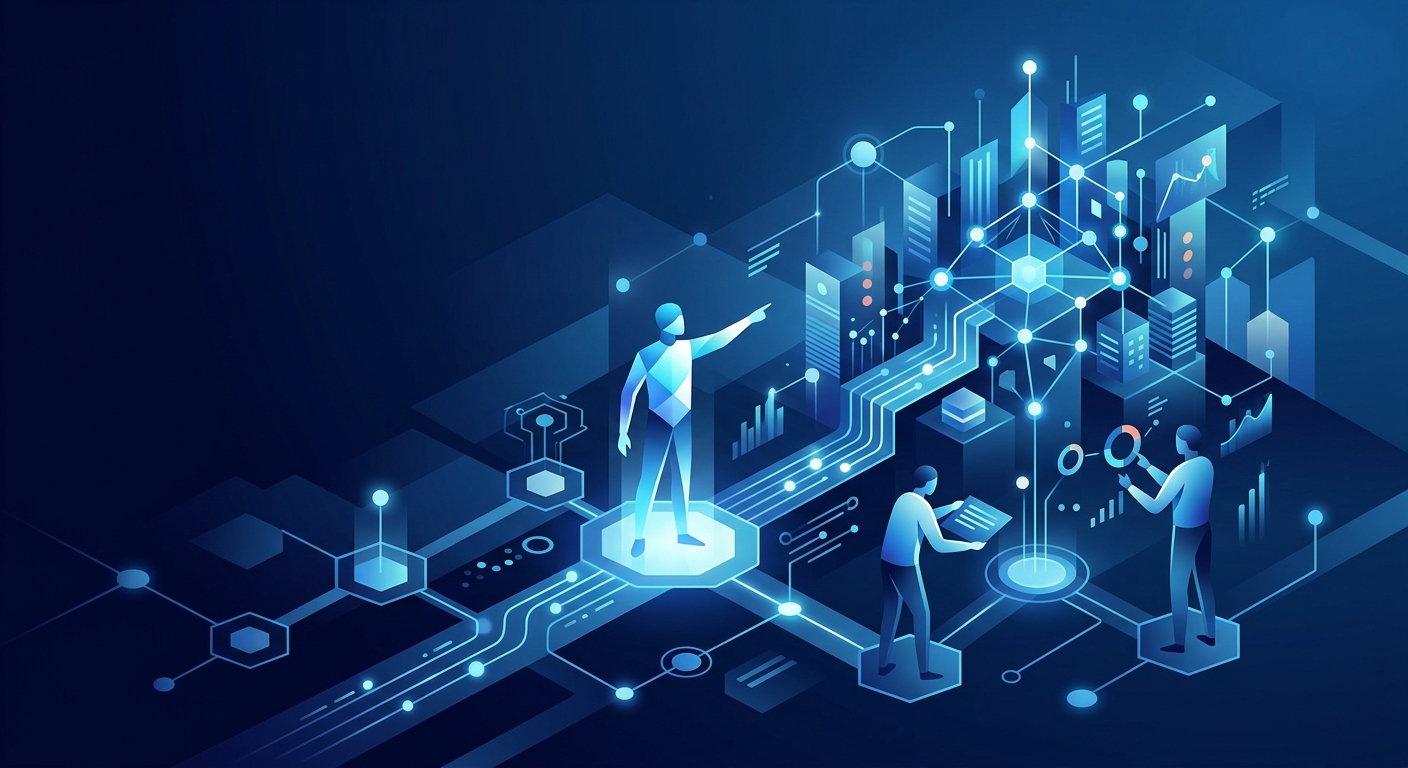
Digital platform consultants are strategic advisors who bridge the gap between high-level business objectives and complex technological architecture. Unlike traditional IT outsourcing, which focuses on maintaining existing systems, digital platform consulting prioritizes the creation of scalable, modular environments known as Data and Digital Platforms (DDP). These platforms serve as the foundation for modern enterprise agility, enabling organizations to deploy AI, automate workflows, and respond to market shifts with unprecedented speed.
Key Takeaways
- DDP Definition: A Data and Digital Platform (DDP) is a modular architecture utilizing data lakes, APIs, and microservices to decouple data from legacy systems.
- Strategic Integration: Consultants act as business integrators, ensuring technology choices are driven by business value rather than vendor bias.
- Legacy Modernization: Transforming monolithic legacy infrastructure into digital platforms is essential for scaling AI and automation.
- Governance: Success requires global data and technology governance to sustain momentum and reduce operational complexity.
What Is a Digital Platform?
A digital platform is a modern architectural framework that allows companies to build and scale applications in a modular way while maintaining ready access to critical data. According to Boston Consulting Group, a Data and Digital Platform (DDP) utilizes core components such as data lakes, APIs, and microservices to serve as a launching pad for high-value use cases.
By decoupling the data layer from the application layer, enterprises can escape the constraints of "monolithic" legacy systems. This separation ensures that data is no longer locked within silos, allowing for real-time analytics and the rapid deployment of Enterprise AI Agent Orchestration. Digital platform consultants specialize in designing these environments to be ecosystem-agnostic, meaning they work across various cloud providers and software suites to find the best fit for the client's specific needs.
Our Approach to Data and Digital Platforms
Our approach focuses on transforming technology from a cost center into a value driver. Digital platform consultants act as business integrators, connecting advanced AI enablement with broader technology ecosystems to accelerate value Boston Consulting Group. We prioritize three main pillars in every engagement:
- Modularity: Building with microservices so that individual components can be updated or replaced without disrupting the entire system.
- Data Accessibility: Utilizing data lakes and robust API layers to ensure that information flows seamlessly between departments.
- Scalability: Designing infrastructure that can handle the increased loads required by autonomous outreach strategies and large-scale data processing.
"Our data and digital platform consultants connect and orchestrate across the organization, combining the role of business integrator with advanced AI enablement to accelerate value—while working seamlessly across the broader technology ecosystem." — Boston Consulting Group
How Data and Digital Platform Engagements Work
Working with clients requires a deep dive into existing technical debt and organizational silos. Consultants often begin by performing a thorough assessment of the existing application, infrastructure, and data architecture to determine migration readiness. This process often involves the "strangler pattern," where features are incrementally moved from a monolith to microservices to maintain stability.
In practice, this means helping a client transition from a rigid, decades-old ERP system to a flexible DDP. For example, Bain & Company notes that they help companies at every step of their digital transformation journeys, from building advanced solutions to transforming legacy IT infrastructure into digital platforms. This work often results in significant cost reductions and the ability to launch new digital ventures that were previously impossible due to technical limitations.
Our Solutions for Digital Platforms
We provide a suite of solutions designed to address the most common bottlenecks in digital evolution. These include:
- Architecture Refactoring: Decomposing monolithic databases into microservices-friendly structures.
- API Management: Developing secure, high-performance APIs that allow internal and external systems to communicate.
- Cloud-Native Deployment: Shifting workloads to the cloud to use auto-scaling and managed services.
- Governance Frameworks: Establishing global data and technology governance to ensure that new capabilities are used consistently across the enterprise BCG Strategy Roadmap.
| Solution Category | Key Feature | Primary Benefit |
|---|---|---|
| DDP Core | Data Lake & APIs | High-speed data access for AI use cases |
| Modernization | Microservices | Reduced system downtime and faster updates |
| Governance | Global Standards | Reduced complexity and lower operational costs |
| Ecosystem | Vendor Agnostic | Optimization of software spend and performance |
Our Partnerships and Ecosystem-Agnostic Strategy
To provide objective advice, digital platform consultants must remain ecosystem-agnostic. This means we steer decisions objectively across partners and solutions, whether integrating a major ERP like SAP or selecting a cloud provider like AWS or Azure BCG Digital Platform.
Key Insight: Modern digital platform consulting focuses on being a "business integrator," where the consultant's value is not in selling a specific software but in ensuring all chosen software works together to meet business goals.
This independence allows us to focus on ROI and performance metrics rather than vendor quotas. We help clients navigate the complex landscape of third-party tools, ensuring that each piece of the technology stack contributes to a unified digital strategy.
Our Insights on Digital Platforms and AI Integration
The integration of AI is no longer a luxury; it is a core requirement of modern platform design. A DDP provides the necessary infrastructure for measuring AI agent ROI by providing the clean, structured data these agents require.
Without a modern digital platform, AI initiatives often fail because they are built on top of fragmented, low-quality data. Consultants help close this gap by ensuring the platform can support advanced AI enablement. This includes setting up continuous monitoring protocols to ensure AI agents perform as expected within the platform ecosystem.
Explore Related Services
Beyond platform consulting, organizations often require specialized support in adjacent areas to fully realize the value of their digital investments. We recommend exploring the following related services:
- Digital Transformation Strategy: Developing the high-level roadmap that guides platform development.
- IT Transformation Consulting: Modernizing the underlying hardware and network infrastructure.
- AI Agent Data Privacy Compliance: Ensuring that your new digital platform adheres to global privacy standards.
- Predictive Maintenance Guide: Applying platform data to industrial and IoT use cases.
We Value Your Privacy and Data Security
In the era of digital platforms, data security is paramount. Every platform we design includes built-in security protocols to protect sensitive client and customer information. As outlined in our Privacy Policy and Data Security guidelines, we implement rigorous encryption, access controls, and audit trail best practices.
Modern digital platforms must comply with regulations like GDPR and CCPA by design. Consultants ensure that data migration and storage practices do not create new vulnerabilities, maintaining the integrity of the organization's digital assets while enabling broader data access for authorized users.
What to Look for in a Data and Digital Platform Consulting Team
Effective platform teams are multidisciplinary, combining technical architects, data scientists and business strategists. According to EY Career Details, a successful digital transformation manager must collaborate across functional teams to define, design, and deploy new features while addressing system challenges in real time.
Look for consultants who hold relevant technical certifications, such as AWS Certified Solutions Architect or Salesforce Certified Technical Architect. These credentials indicate the technical depth needed to handle complex invoice exception handling workflows and other automated enterprise processes.
The Keys to Digital Transformation: Getting Success Factors Right
Success in digital transformation is not guaranteed by technology alone. It requires getting the success factors right from the start. Key factors include:
- Strategic Clarity: Moving away from dispersed digital efforts toward a unified roadmap that supports growth and reduces complexity BCG Roadmap.
- Executive Leadership: Strong buy-in from the C-suite to drive cultural change alongside technical change.
- Agile Methodology: Implementing iterative development cycles to deliver value quickly and pivot when necessary.
- Talent Alignment: Ensuring the workforce is prepared for the shift, particularly in roles where AI is reshaping occupations.
Frequently Asked Questions
What is the difference between a boutique firm and a top-tier consultancy?
Top-tier firms like BCG or Bain offer global scale and proprietary frameworks like the DDP, while boutique firms often provide niche expertise at a different price point. While top-tier rates can exceed $1,000 per hour for specialized AI consulting, boutique firms may offer more flexible, project-based fee structures.
How long does a typical platform transformation take?
Small-scale modernizations can take 6–12 months, while full enterprise-wide transitions from legacy monoliths to a DDP can take 2–3 years, depending on the complexity of the technical debt.
What certifications should I look for in a consultant?
Look for consultants with "System Architect" and "Application Architect" certifications, particularly within the ecosystems you use most (e.g., Salesforce, AWS, or Azure).
How do consultants handle data migration from legacy systems?
Consultants typically use the "strangler pattern," which involves incrementally migrating data and functionality to the new microservices architecture to minimize risk and downtime.
Is a DDP necessary for AI implementation?
While not strictly required for small pilots, a Data and Digital Platform is essential for scaling AI across an enterprise, as it provides the modularity and data access needed for complex agentic workflows.
How do you measure the ROI of a digital platform?
ROI is measured through cost reduction (lower maintenance of legacy systems), increased speed to market for new features, and revenue growth from new digital capabilities.