Executive Overview: Shifting from Cost Center to Accountable Workforce
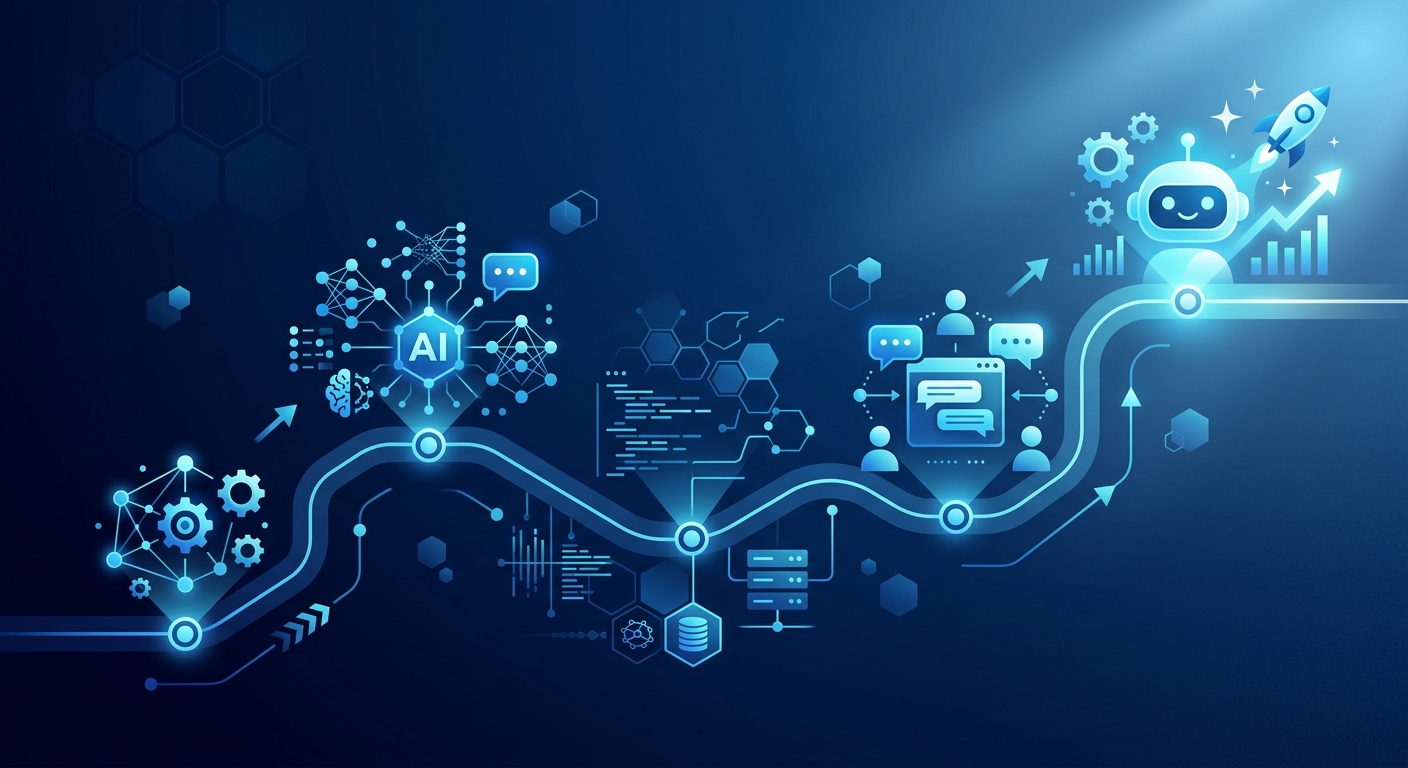
The traditional customer support function has long operated as a reactive cost center, constrained by linear headcount scaling, persistent turnover, and inconsistent service delivery. Forward-thinking enterprises are transitioning from legacy, menu-driven chatbots to autonomous AI agents that function as an accountable, scalable workforce. Unlike scripted deflectors, modern agentic systems execute end-to-end resolutions while maintaining strict compliance, contextual awareness, and brand alignment HYPESTUDIO. This architectural evolution resolves the systemic inefficiencies of traditional support scaling, where labor overhead, onboarding bottlenecks, and fatigue-driven quality degradation consistently erode customer experience.
At the core of this transformation is Meo’s pay-for-performance model, which aligns AI procurement directly with verified business outcomes. Rather than funding speculative software licenses, organizations invest exclusively in measurable results: resolved tickets, quantifiable labor savings, and sustained CSAT improvements. This financial alignment eliminates upfront deployment risk, transforming customer support from a variable expense into a predictable, outcome-driven asset.
Phase 1: Operational Audit & Outcome Alignment
A high-impact AI implementation begins with rigorous operational auditing and precise outcome mapping. Prior to technology provisioning, we conduct a granular workflow audit to isolate high-volume, rules-based processes with immediate automation potential. These typically include order status inquiries, credential resets, billing clarifications, return authorizations, and tier-1 technical troubleshooting—tasks that consume disproportionate agent bandwidth yet follow highly predictable resolution paths ProjectPro.
Concurrently, we establish objective baseline KPIs to anchor post-deployment measurement. Critical metrics include fully loaded cost-per-ticket, first-contact resolution (FCR) rates, average handle time (AHT), and baseline Customer Satisfaction (CSAT) scores. These baselines establish the definitive benchmark for AI validation. Meo’s framework explicitly ties billing to predefined success thresholds: if the AI fails to meet agreed cost, CSAT, or FCR targets, no billing is triggered. This outcome-first model ensures leadership funds verified productivity gains rather than vendor promises. For detailed financial structuring, review our Pay-for-Performance Model to align stakeholder expectations prior to deployment.
Phase 2: Architecting the Agent Workforce
With operational baselines established, Phase 2 focuses on engineering a resilient, enterprise-grade AI architecture. Selecting underlying large language models (LLMs) requires balancing reasoning capability, inference latency, and strict compliance requirements. We deploy LLMs optimized for deterministic task execution within secure, isolated knowledge architectures configured to your security and privacy requirements (for example GDPR) BGV. Data sovereignty is non-negotiable: customer PII and proprietary documentation are never used to train public foundation models. All contextual understanding is managed via retrieval-augmented generation (RAG) operating exclusively over permissioned enterprise repositories.
Beyond infrastructure, we engineer strict conversational guardrails and human-in-the-loop (HITL) escalation protocols. These protocols define precise, condition-based triggers for seamless human handoff, such as detecting elevated customer frustration, identifying out-of-scope requests, or encountering ambiguous compliance scenarios. We embed comprehensive audit layers into every interaction, cryptographically logging decision paths, API calls, and knowledge retrievals. This enables compliance teams to fully reconstruct agent reasoning. Additionally, deterministic fallback mechanisms automatically route interactions to pre-approved responses or human agents when confidence scores fall below defined thresholds. For detailed risk mitigation protocols, review our Security, Compliance & Governance framework.
Phase 3: Phased Deployment & Legacy System Integration
Phase 3 executes a low-disruption, tiered rollout strategy designed to validate real-world performance before full-scale activation. Rather than implementing an enterprise-wide switch, we deploy AI agents in controlled environments—starting with specific product lines, regional markets, or tier-1 support queues. This graduated approach enables engineering and CX teams to calibrate agent behavior against live interactions without risking service degradation.
Seamless legacy integration is critical to operational continuity. Our engineering teams establish direct API, webhook, and database connectivity across existing CRMs, helpdesk ecosystems, payment processors, and omnichannel telephony stacks. Data silos are eliminated through standardized integration protocols, including the Model Context Protocol (MCP), which has emerged as the enterprise standard for securely connecting autonomous agents to SaaS applications and internal databases Xenoss. Once integrated, agents are calibrated using proprietary SOPs, historical resolution logs, and organizational brand guidelines. This ensures automated interactions reflect institutional knowledge rather than generic training data. Our Implementation Methodology mandates rigorous stress-testing for latency, data accuracy, and failover resilience prior to launch.
Phase 4: Performance Tracking & Outcome-Driven Scaling
Phase 4 transitions deployment into continuous, data-validated scaling. Traditional vanity metrics—such as chat volume, impressions, or average response time—are replaced with executive dashboards tracking verifiable business outcomes. Real-time analytics monitor fully resolved tickets, accurate deflection rates, cost-per-interaction reduction, and longitudinal sentiment trends. Because billing is contractually tied exclusively to these verified outcomes, organizations achieve immediate cost transparency, predictable unit economics, and direct P&L alignment.
Automated post-interaction analysis drives continuous optimization. The system aggregates successful resolutions, isolates edge cases, and dynamically updates knowledge retrieval pathways without manual engineering overhead. Advanced sentiment analysis further refines conversational tone and resolution strategies, ensuring interactions remain empathetic, brand-aligned, and progressively more effective Parloa. As validation data compounds, the pilot scales into an operational, self-sustaining AI workforce. Agents progressively assume complex workflows, offsetting legacy BPO contracts and reducing outsourced labor dependency. This transition consistently lowers support costs while improving resolution quality and customer retention. For a detailed financial breakdown, review our ROI & Performance Metrics framework.
Next Steps: Securing Your Risk-Mitigated AI Pilot
Securing enterprise AI deployment begins with a structured workflow qualification process. Our engineering and strategy teams will map high-impact support queues, identify legacy integration dependencies, and project exact labor savings based on historical ticket volumes and resolution patterns. ROI and overhead reduction are measured from activation against your historical baseline. Because Meo’s pay-for-performance model eliminates upfront capital expenditure, executives can validate real-world outcomes before committing to enterprise-wide scaling. Schedule a consultation with our solutions architecture team to initiate pilot scoping and secure a risk-mitigated, outcome-backed AI deployment.