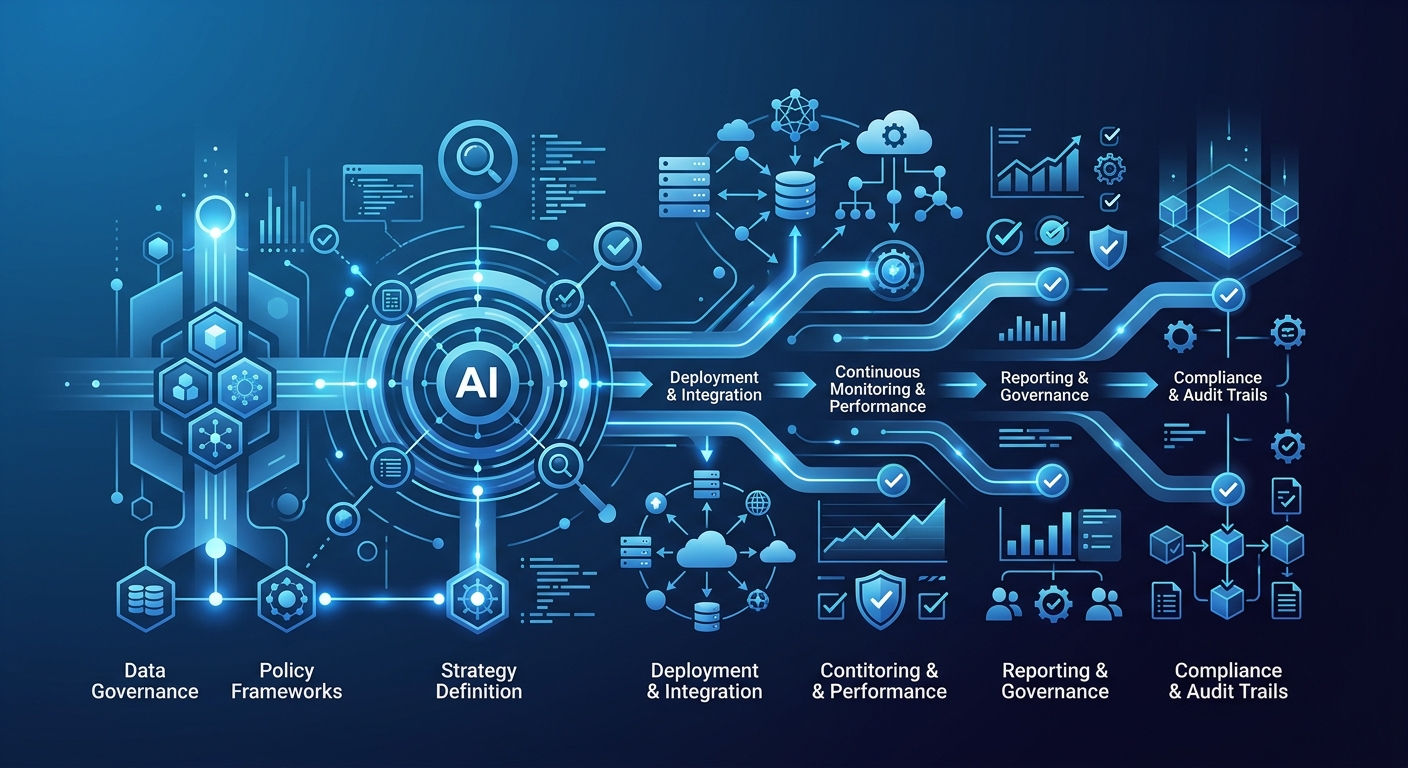
Executive Context: The Shift from Manual Overhead to AI Audit Accountability
Legacy audit frameworks are collapsing under modern regulatory velocity. Manual sampling, static rule engines, and fragmented spreadsheets cannot keep pace with dynamic compliance mandates or real-time financial scrutiny. Fixed labor overhead and unpredictable audit cycles are misaligned with contemporary compliance demands. Enterprises are replacing this rigidity with outcome-driven AI agents that operate as a scalable, accountable workforce. Shifting from headcount-based procurement to measurable compliance verification aligns audit investments directly with verified business outcomes. This transition demands rigorous execution: reduced cycle times, comprehensive transaction coverage, and defensible, real-time reporting. With PwC projecting end-to-end AI audit automation by 2026 PwC expects end-to-end AI audit automation within 2026, organizations treating audit agents as strategic workforce assets—not experimental IT pilots—will secure a decisive compliance advantage.
Phase 1: Align Agent Scope with Regulatory Mandates & Risk Tolerance
Deployment begins with precise scope definition. Audit leaders must map explicit regulatory frameworks (SOX, GDPR, HIPAA, internal controls) directly to discrete agent capabilities. Rather than deploying generalized automation, organizations should configure agents to execute high-impact audit functions: continuous control monitoring, journal entry testing, or vendor compliance verification. Pre-deployment success metrics are non-negotiable. Establish baseline thresholds for accuracy, coverage depth, and cycle-time reduction before granting operational autonomy. For example, targeting 99.2% precision for exception flagging and a 70% reduction in manual sampling hours creates unambiguous accountability. Formalize cross-functional ownership across internal audit, compliance, and IT to prevent siloed deployment. The Compliance & Risk Agents framework provides a structured approach to aligning agent permissions with organizational risk tolerance. Anchoring AI capabilities to explicit compliance obligations ensures automation mitigates regulatory exposure rather than compounding it. This disciplined scoping transforms agents from experimental tools into accountable workforce extensions.
Phase 2: Engineer for Secure Integration & Immutable Data Integrity
Production-grade audit systems require uncompromising security and data integrity. Deploy agents within a zero-trust architecture, enforcing granular role-based access controls (RBAC) for all sensitive financial, operational, and personnel data. Eliminate standing privileges. Use ephemeral, least-privilege credentials scoped strictly to active audit workflows. Seamless integration across existing enterprise ecosystems (ERP platforms, GRC suites, document management systems) is critical for comprehensive coverage. Enforce strict input validation schemas to prevent data corruption from skewing automated findings. Implement cryptographic audit trails for every AI action. Immutable hashing and timestamping of evidence collection, anomaly flags, and decision logs ensure defensibility during regulatory examination. Industry analysis confirms a rapid shift from isolated pilots to secure, system-wide deployments requiring rigorous data lineage Enterprise AI Agents Go Mainstream: 2026 Report Highlights. A structured Security, Compliance & Governance posture ensures automated reporting meets SOX and GDPR evidentiary standards. This architectural discipline eliminates the black-box problem, guaranteeing every output is traceable, verifiable, and legally defensible.
Phase 3: Embed Governance, Accountability & Human Validation Protocols
Autonomy does not eliminate human oversight; it elevates it to a strategic function. Embed mandatory validation checkpoints directly into the reporting pipeline. While agents process millions of transactions at machine speed, high-risk anomalies and material control deficiencies must trigger standardized escalation workflows. Clear escalation matrices ensure senior auditors intervene only where human judgment, contextual nuance, or regulatory interpretation is required. This human-in-the-loop architecture optimizes auditor focus while preserving strict accountability. Regulatory defensibility hinges on transparent logic and version control. Log and approve every model update, prompt modification, and rule adjustment through centralized change management. By 2026, embedded agents will be expected to execute complex tasks safely without introducing operational risk AI Agents in Enterprise Apps by 2026: What to Build Now. Maintain rigorous Agent Monitoring & Quality Assurance protocols to align agent behavior with evolving standards. Baking governance into the deployment lifecycle delivers predictable audit outcomes without compromising compliance or control.
Phase 4: Optimize, Scale, & Transition to Pay-for-Performance Models
Post-validation, transition agents from pilot status to continuous optimization. Track precise operational KPIs (false-positive rates, reporting turnaround, direct labor displacement) to drive strategic scaling. Phase out speculative licensing fees and transition to outcome-driven procurement. Aligning capital deployment with verified audit outcomes ensures investment correlates directly with measurable risk reduction. Deploy standardized templates to rapidly replicate proven configurations across global business units, eliminating redundant development cycles. This execution-first approach aligns with proven enterprise AI strategies that prioritize clear ownership and measurable outcomes over theoretical capability The CIO’s Playbook for Enterprise AI Strategy in 2026: Governance, Execution, and Best Practices. Adopting a Pay-for-Performance Model converts audit automation from a fixed cost center into a scalable, accountable workforce. The result: predictable compliance velocity, reduced overhead, and procurement that rewards only verified outcomes.
Conclusion: Deploying Audit Agents as a Scalable, Accountable Workforce
The transition from manual audit overhead to AI-driven compliance accountability requires more than software procurement. It demands a structured, outcome-verified deployment methodology. Rigorous scoping, zero-trust integration, embedded governance, and performance-aligned contracting unlock predictable compliance and sustained operational efficiency. Maintain accountability as the cornerstone of enterprise AI procurement. When organizations tie AI investments directly to measurable audit outcomes, they eliminate speculative overhead and build a resilient, scalable audit function. Successful enterprises treat AI not as an experiment, but as a verified workforce extension governed by strict metrics. To transition from overhead-heavy processes to outcome-verified operations, organizations must establish clear success baselines, integrate Implementation Methodology standards, and mandate pay-for-performance agreements. The compliance landscape will not wait for hesitant adopters. Deploying AI audit agents with precision, accountability, and measurable ROI is no longer optional—it is the standard for enterprise resilience.